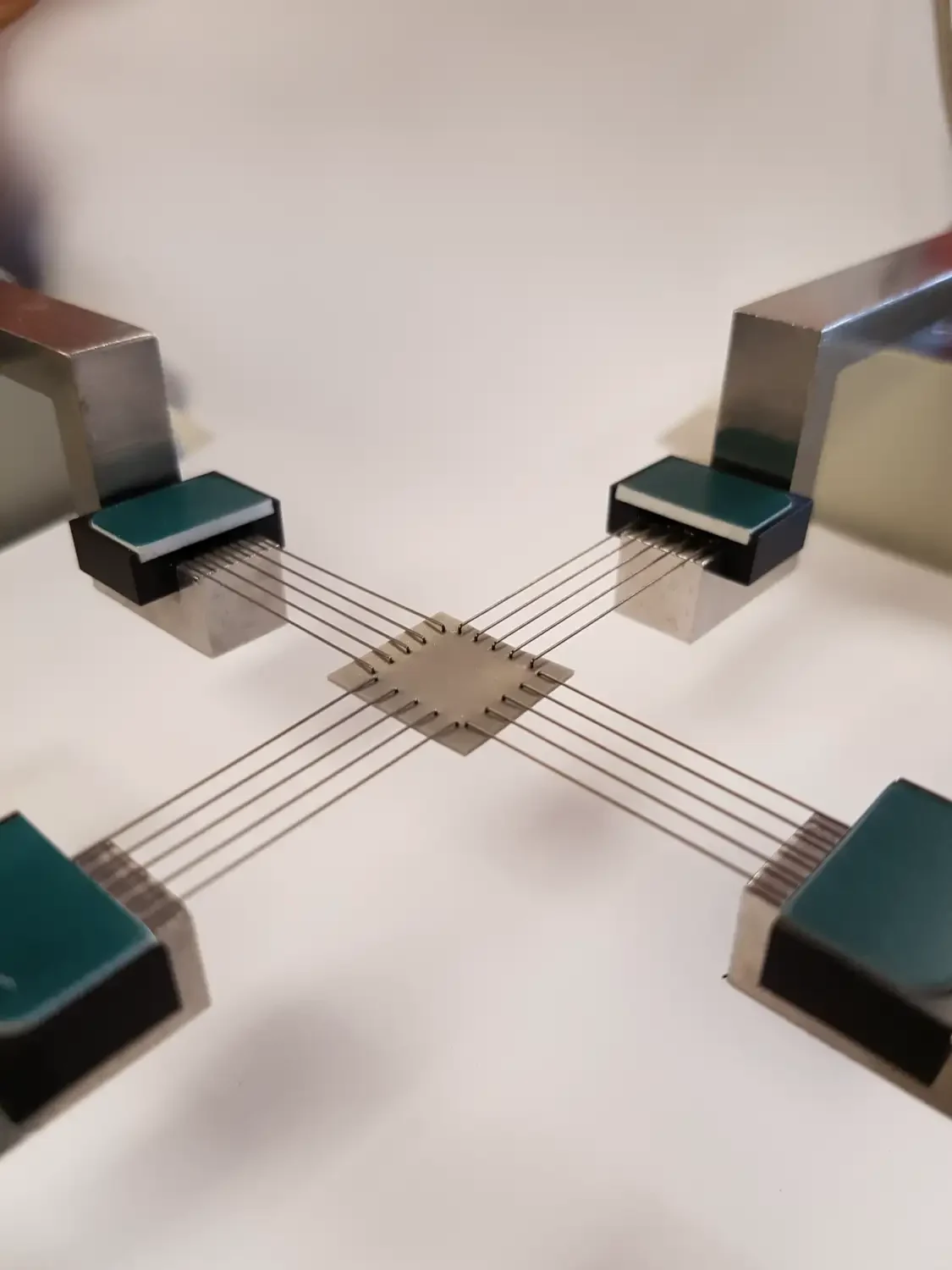
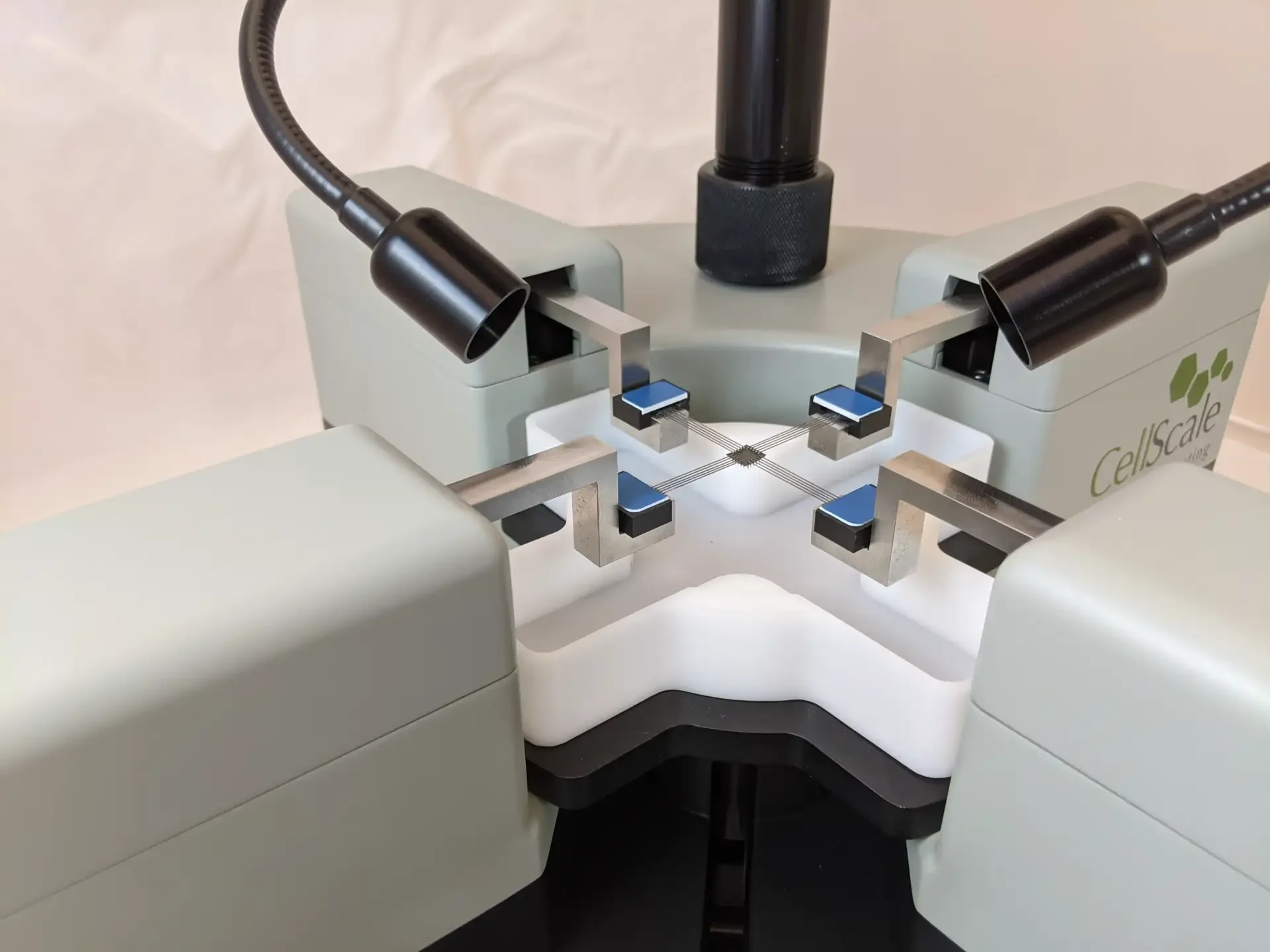
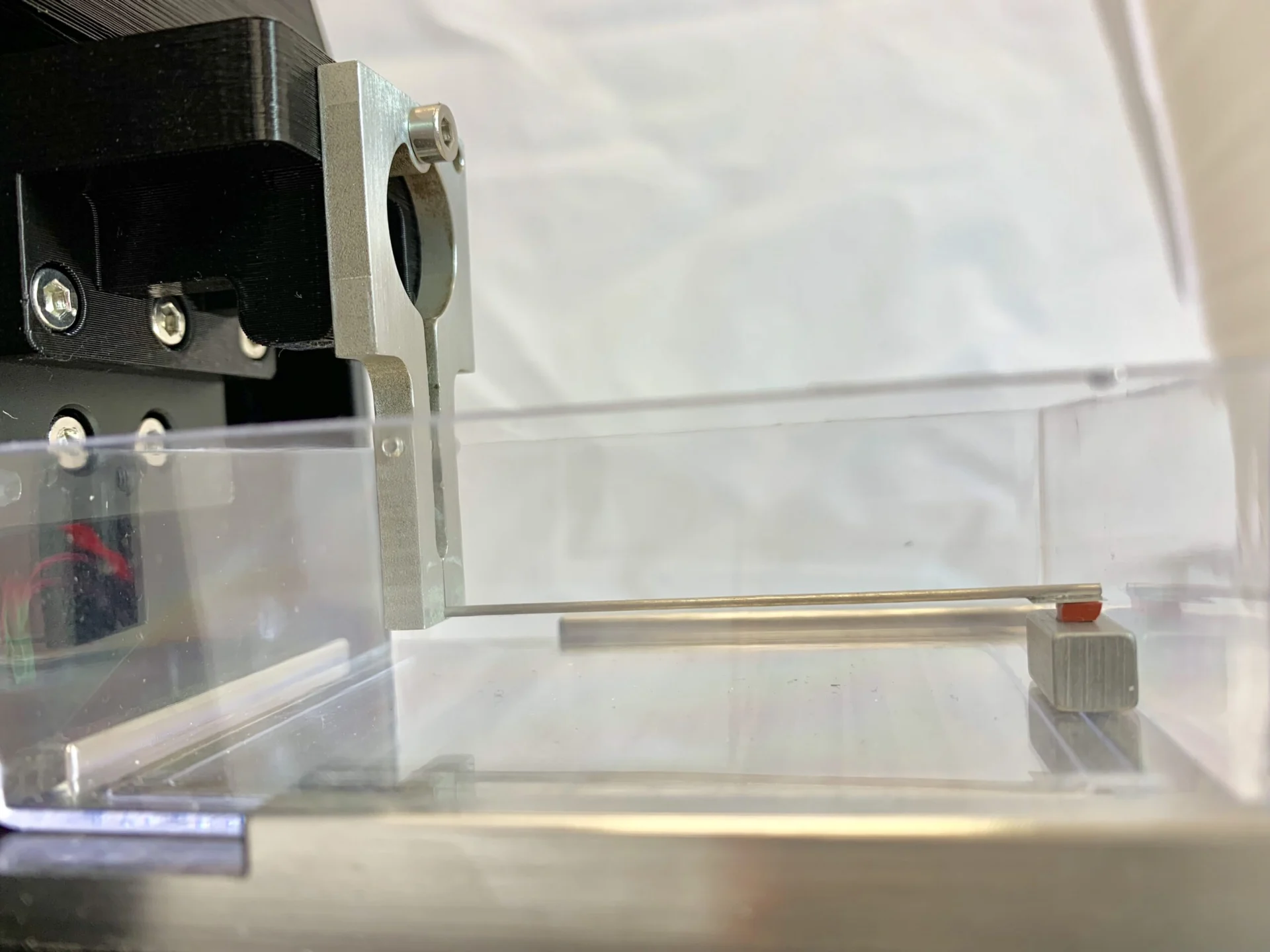
CellScale instruments are used to quantify mechanics of soft materials and tissues, reproduce physiological mechanical environments, and connect mechanics to biological function in a wide range of soft materials and biomaterials testing applications.
Researchers can explore mechanical testing applications from three angles:
Testing Methods
To learn more about specific mechanical testing methods CellScale instruments are capable of
Research Applications
When you want to understand materials testing in the context of your scientific field
Education
If you’re interested in using our mechanical testers in the classroom for a course or program at the university or advanced high school level
Teaching labs can also use this Applications hub to build hands-on modules around core mechanical testing methods. If you are looking for tensile testing for teaching labs, plus classroom-ready compression and bending labs, explore our Education hub.
Mechanical Testing Methods
Mechanical testing methods provide the foundation for understanding the behaviour of biological tissues, biomaterials, polymers, engineered constructs, and general-purpose materials. These methods form the basis of many biomaterials testing applications across research and industry.
Tensile
Compression
Biaxial
Ultra-Low Force
Micro-Mechanical
Pressure
Viscoelastic & Time-Dependent
Hydration and Temperature Controlled
Looking for classroom-ready modules? See our Education Hub for tensile testing for teaching labs and guided compression and bending experiments.
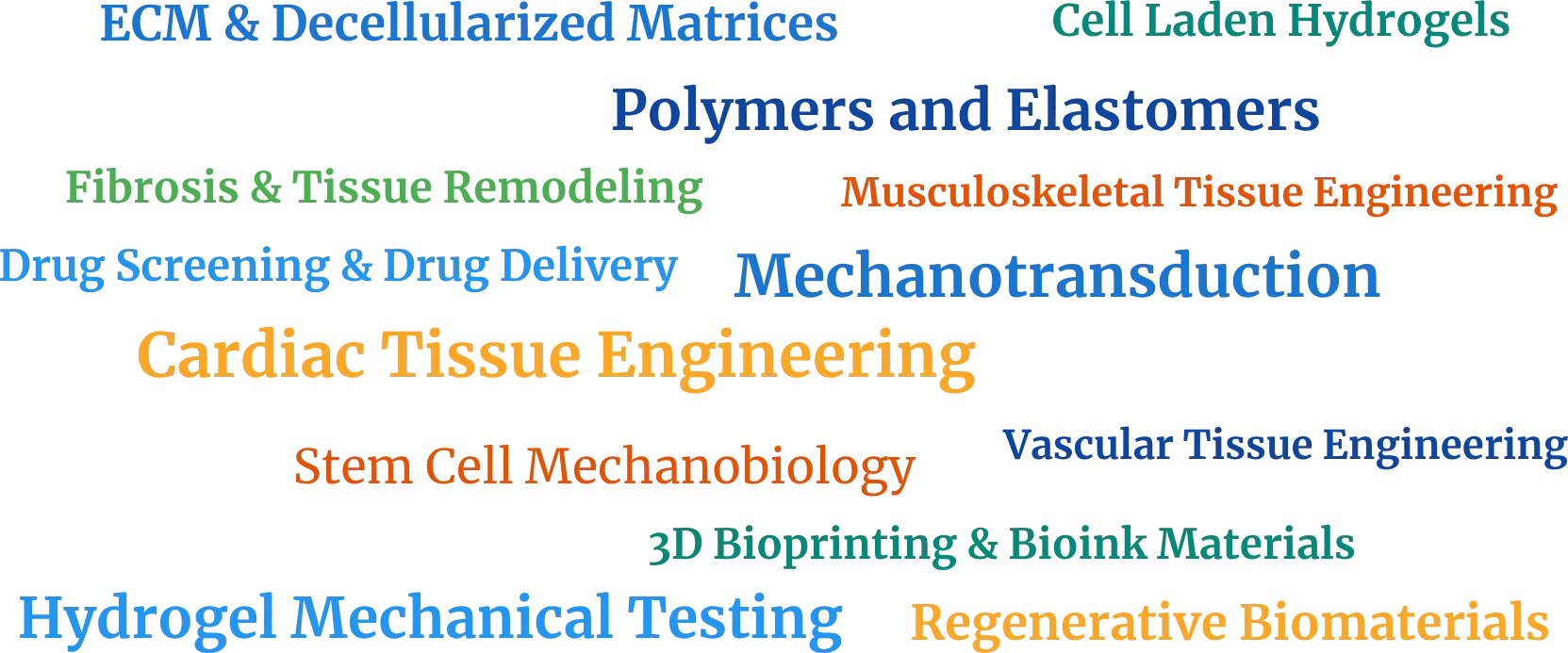
This section groups biomaterials testing applications related to mechanical testing of soft tissues, biomaterials, hydrogels, scaffolds, and micro-scale constructs across multiple research areas.
A. Tissue Engineering and Soft Tissue Biomechanics
This category groups biomaterials research applications involving mechanical characterization of native and engineered soft tissues. Topics commonly addressed include tissue-level mechanical behaviour and testing approaches used in tissue engineering research.
This category includes biomaterials research applications focused on mechanical testing of biomaterials and advanced material systems. Covered topics span a range of soft and engineered materials tested under different loading conditions.
This category covers biomaterials research applications involving mechanical testing methods at the cellular and micro-scale. Areas commonly represented include studies of cell–material interactions, micro-scale biomaterials research, and device-integrated biological systems.
Education modules translate mechanical characterization concepts into hands-on experiments for students. Explore tensile testing for teaching labs and multi-method lab workflows designed for undergraduate biomaterials and biomechanics courses.
CellScale systems deliver precise force and displacement control for testing materials ranging from ultra soft hydrogels and cell culture to native tissues and engineered constructs. This performance is essential for reproducible biomaterials testing applications across diverse fields.
With integrated imaging, lifetime access to our Data Analysis software, and lifetime technical support, our instruments give you the accuracy and flexibility you need for advanced biomaterials research.
Research Capabilities:
Accurate tension, compression, shear, torsion, fatigue, and pressurization
Hydrated and temperature-controlled environments
High-resolution imaging and digital strain mapping
Micro-scale testing capabilities for organoids and microtissues
Cell and tissue mechanical stimulation for cultured specimens