



Mechanical Testing Systems
for Biomaterials & Soft
Tissue Research
Biomaterials, soft tissues, and engineered constructs do not behave like the rigid materials many test frames are built around. They are often soft, direction-dependent, and physiologically-relevant, and their response can shift over time. CellScaleโs mechanical testing systems are built for these realities, combining sensitive force measurement, research-focused fixtures, and imaging-ready workflows to help you generate defensible mechanical data.
Mechanical Testing Systems on the Benchtop
CellScale designs each platform below as a benchtop mechanical tester optimized for research environments where specimens are small, hydrated, and difficult to grip. Compared to other universal testing machines, our mechanical testing systems emphasize repeatable mounting, low-noise measurements, physiologically-relevant testing environments, and imaging integration so strain and deformation can be interpreted in the region that matters.
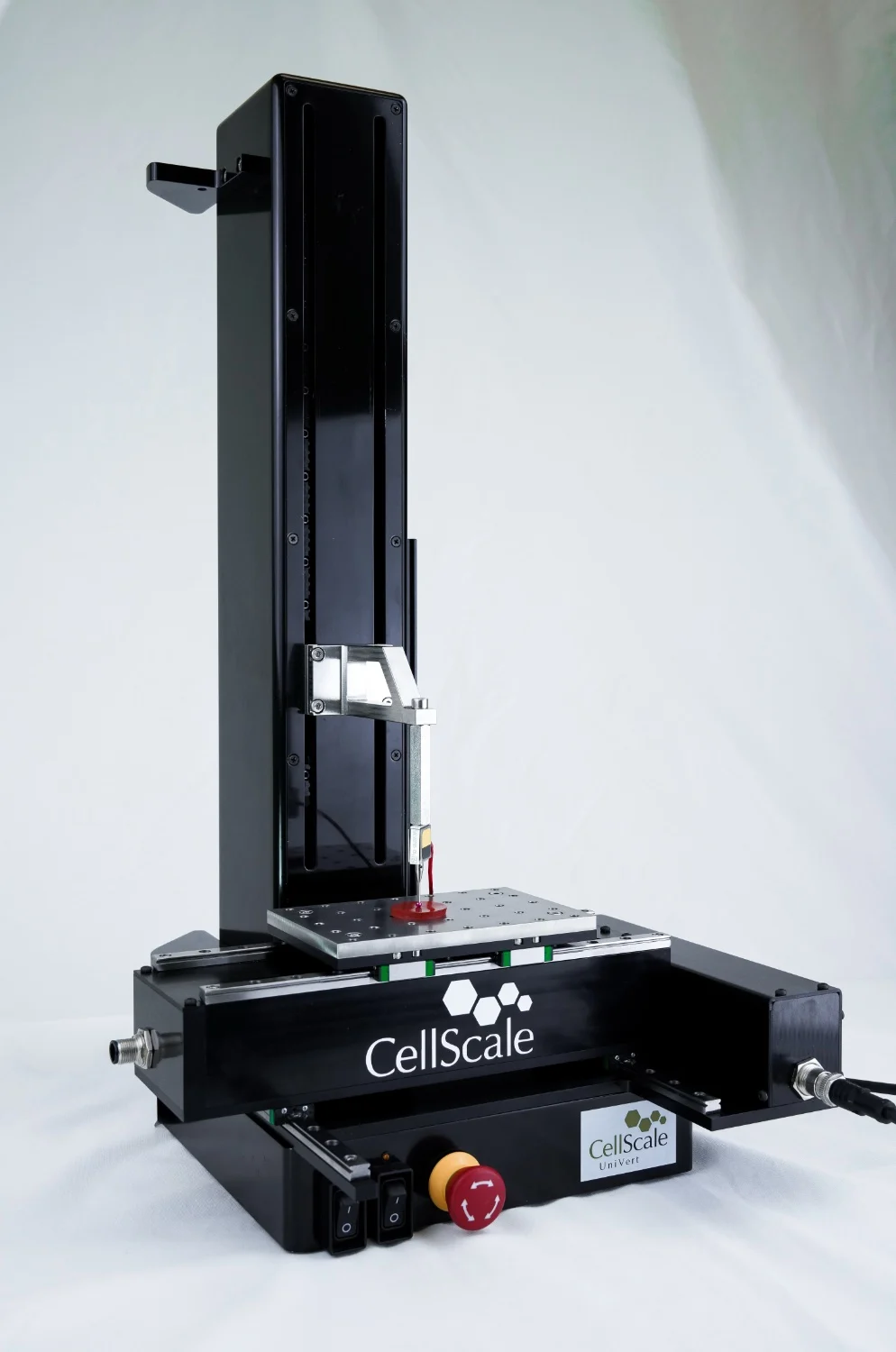
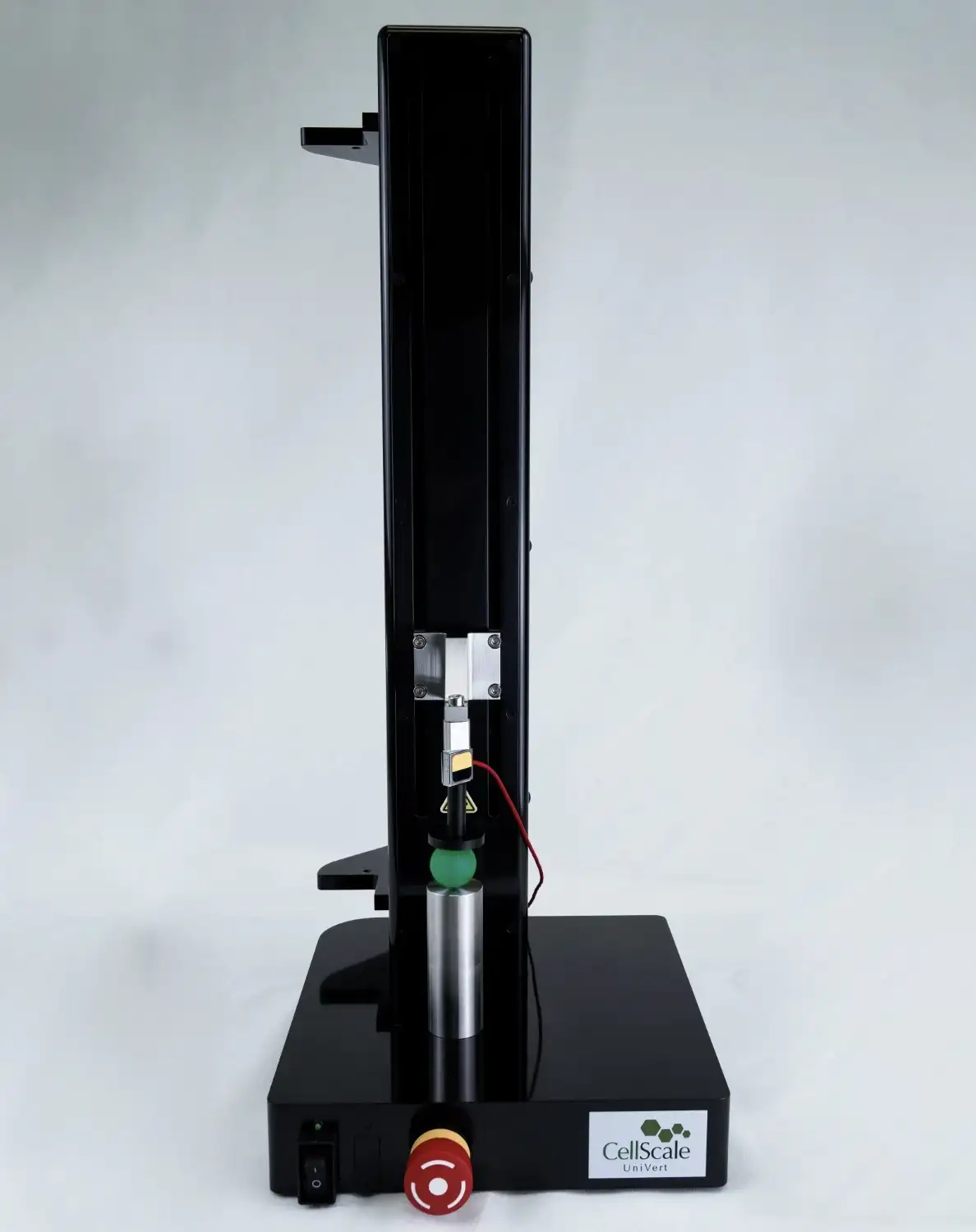
UniVert
Uniaxial mechanical testing system for tensile, compression, pressure, shear, torsion, and more workflows across soft tissues, hydrogels, elastomers, and engineered constructs, as well as for low-force general-purpose mechanical testing. The UniVert spans low to high loads, supports imaging-based strain measurement and hydrated protocols, and can be configured for teaching labs and biomechanics courses.
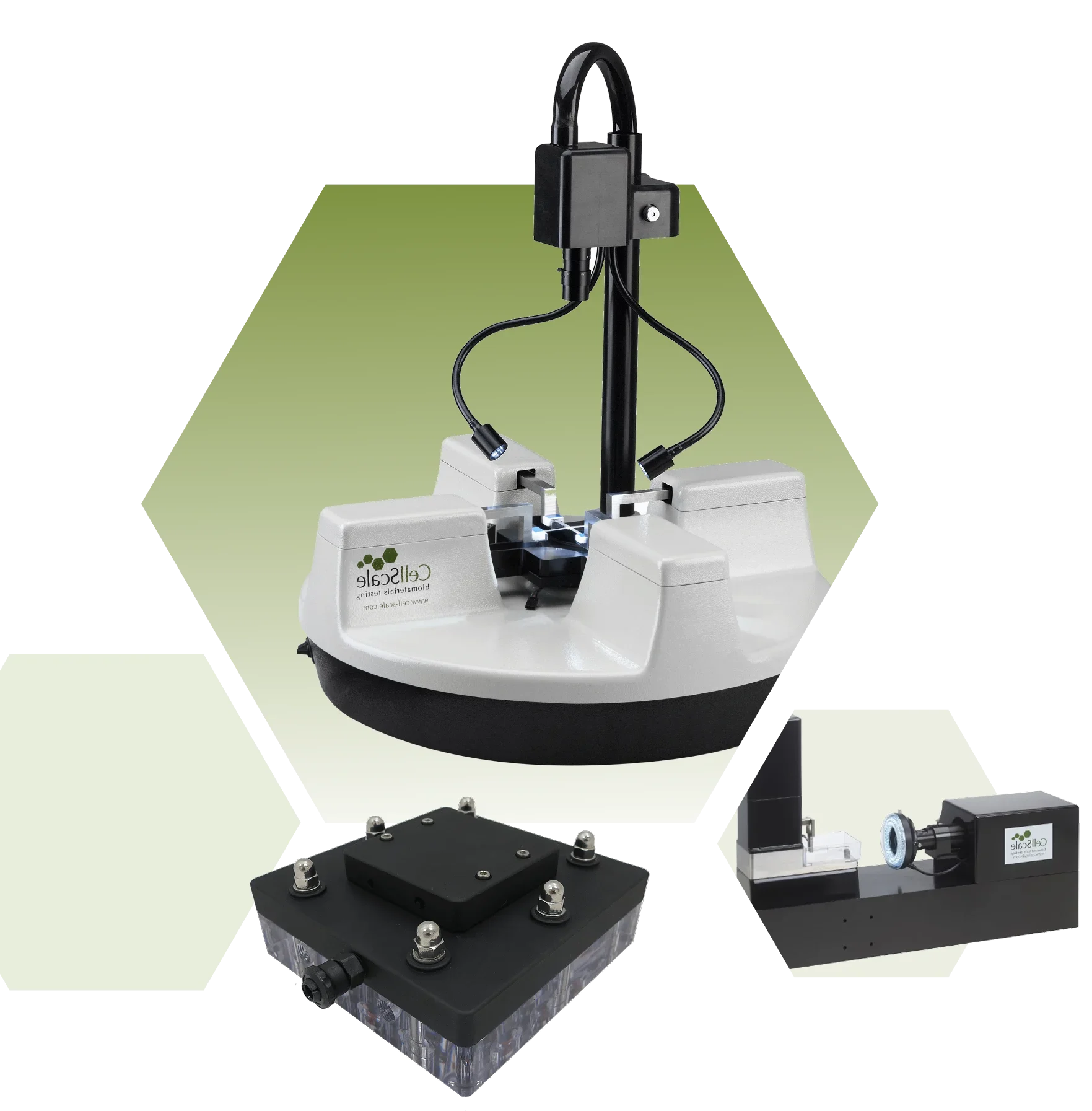
MicroTester
Micro-scale mechanical testing system for tiny specimens and low-load protocols where alignment and contact definition govern the result. The MicroTester is a strong fit when your workflow demands low-force mechanical testing with integrated imaging for alignment, tracking, and interpretation.
BioTester
Planar biaxial biomechanical testing system for anisotropic soft tissues and biomaterials. The BioTester enables equibiaxial and non-equibiaxial loading with imaging-enabled strain measurement and hydrated, temperature-controlled testing conditions.
These three mechanical testing machines are designed to complement one another across specimen scale and loading mode, rather than overlap.
How to Choose Among Mechanical Testers
Use the guide below to narrow down which of our mechanical testing systems fits your sample size, loading mode, and data requirements. It can also help if you are weighing a universal materials testing machine against a mechanical testing machine set up for soft specimens.
- Donโt see your workflow? Explore Custom Solutions.
Choose the UniVert for versatile uniaxial testing
Pick the UniVert when you need:
- A versatile uniaxial mechanical tester for low to high-force testing
- Broad load capability for testing methods from compression and tensile to puncture and fatigue testing
- Hydrated testing with optional temperature control
- Imaging-based strain measurement when crosshead displacement does not reflect gauge-region strain
Many labs choose the UniVert when they need one mechanical testing machine to cover a broad range of uniaxial methods on the benchtop.
Choose the MicroTester for micro-scale, low-load experiments
Pick the MicroTester when you need:
- Micro-scale mechanical testing workflows where specimen size and handling drive repeatability
- Low-force mechanical testing to resolve subtle differences in delicate samples
- Imaging at the center of the workflow for alignment verification and deformation tracking
- Hydrated and temperature-controlled testing for sensitive constructs
The MicroTester is the right benchtop mechanical tester when your samples are too small or too delicate for conventional methods and test frames.
Choose the BioTester for planar biaxial mechanics
Pick the BioTester when you need:
- Two-axis loading to quantify anisotropy under physiologic-like conditions
- A biomechanical testing system optimized for soft tissue mounting and repeatability
- Equibiaxial and non-equibiaxial protocols in force or displacement control
- Imaging-enabled strain measurement, including DIC-style strain mapping
The BioTester is the preferred mechanical testing system when your research questions require planar biaxial loading rather than uniaxial simplifications.
Relevant Research Applications
Use these application hubs to connect your workflow to the right CellScale materials testing machine.
- Tissue Engineering & Soft Tissue Biomechanics
- Areas like cardiac tissue engineering, skin and wound healing, musculoskeletal biomechanics, bone tissue engineering, and reproductive mechanics.
-
Mechanobiology &
Bioelectronics
- Applications include cancer mechanobiology, organ-on-a-chip systems, wearable bioelectronics, fibrosis and tissue remodeling, and stem cell mechanobiology.
-
Biomaterials & Advanced
Materials
- Research in hydrogel mechanical testing, 3D bioprinting, adhesives and sealants testing, soft robotics materials, and extracellular matrix mechanics.
Biomechanical Testing System Workflows That Benefit from Imaging
In soft tissue and biomaterials research, the biggest errors often come from assuming that actuator displacement equals specimen strain. A research-grade biomechanical testing system should let you verify what the gauge region is actually doing, especially when samples slip, grips deform, or strain localizes outside the region of interest.
CellScale mechanical testing systems support imaging-enabled workflows to help you:
- Confirm alignment and contact during setup
- Measure strain in the gauge region rather than relying on crosshead displacement
- Track deformation during time-dependent protocols
- Quantify spatially varying strain fields using DIC-style approaches (configuration dependent)
For many labs, imaging is the practical difference between a generic materials testing machine and a biomechanical testing system designed for soft, hydrated samples.
Mechanical Testing Systems Comparison
UniVert
Uniaxial tension, compression, fatigue, peel, and more testing on the benchtop, spanning delicate (ultra-low force down to 0.02N) to higher-load protocols (up to 1000N) with imaging-ready, hydrated configurations.
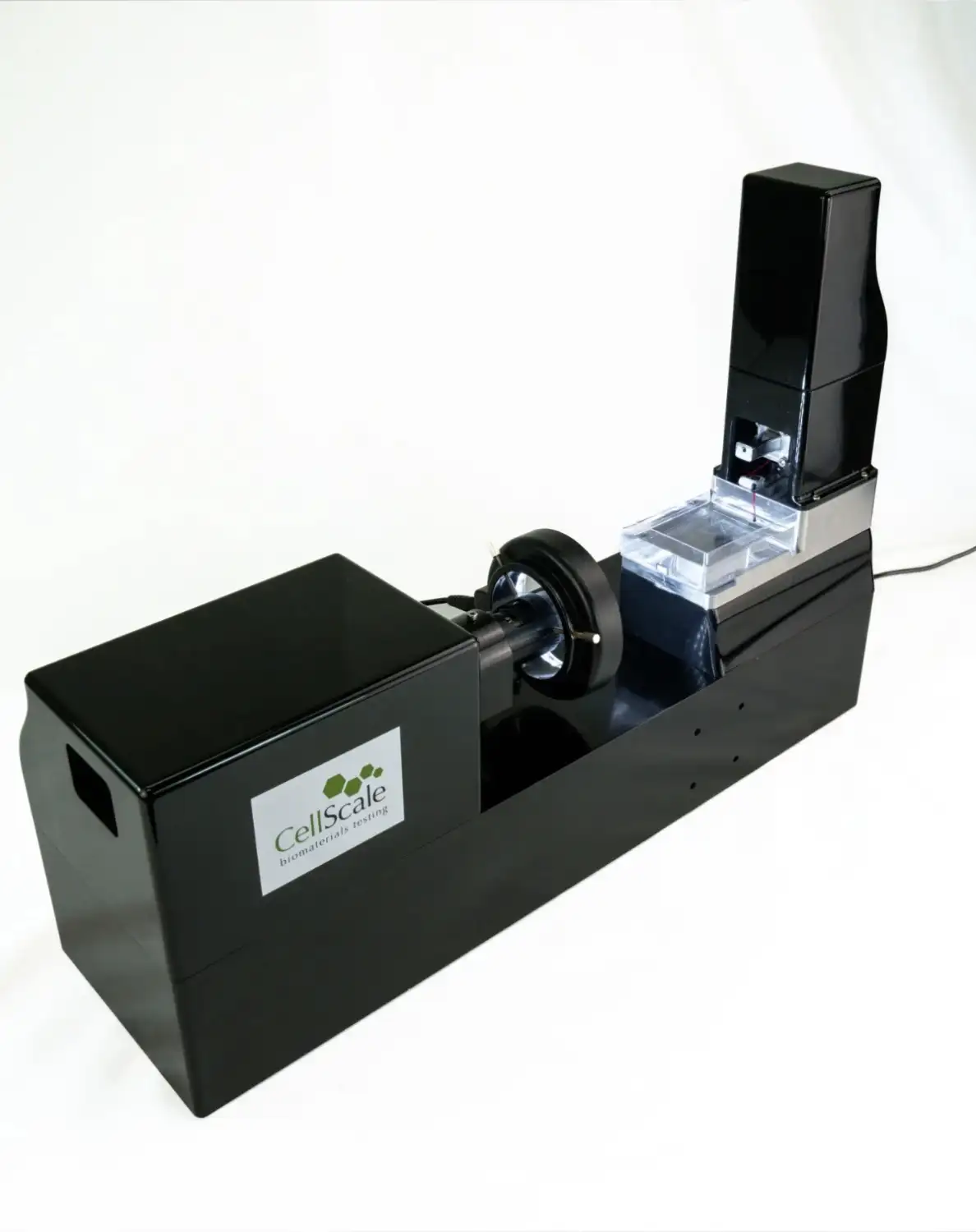
MicroTester
Micro-scale platform for low-force mechanical testing (down to 10nN) where integrated imaging supports alignment, contact definition, and deformation tracking.
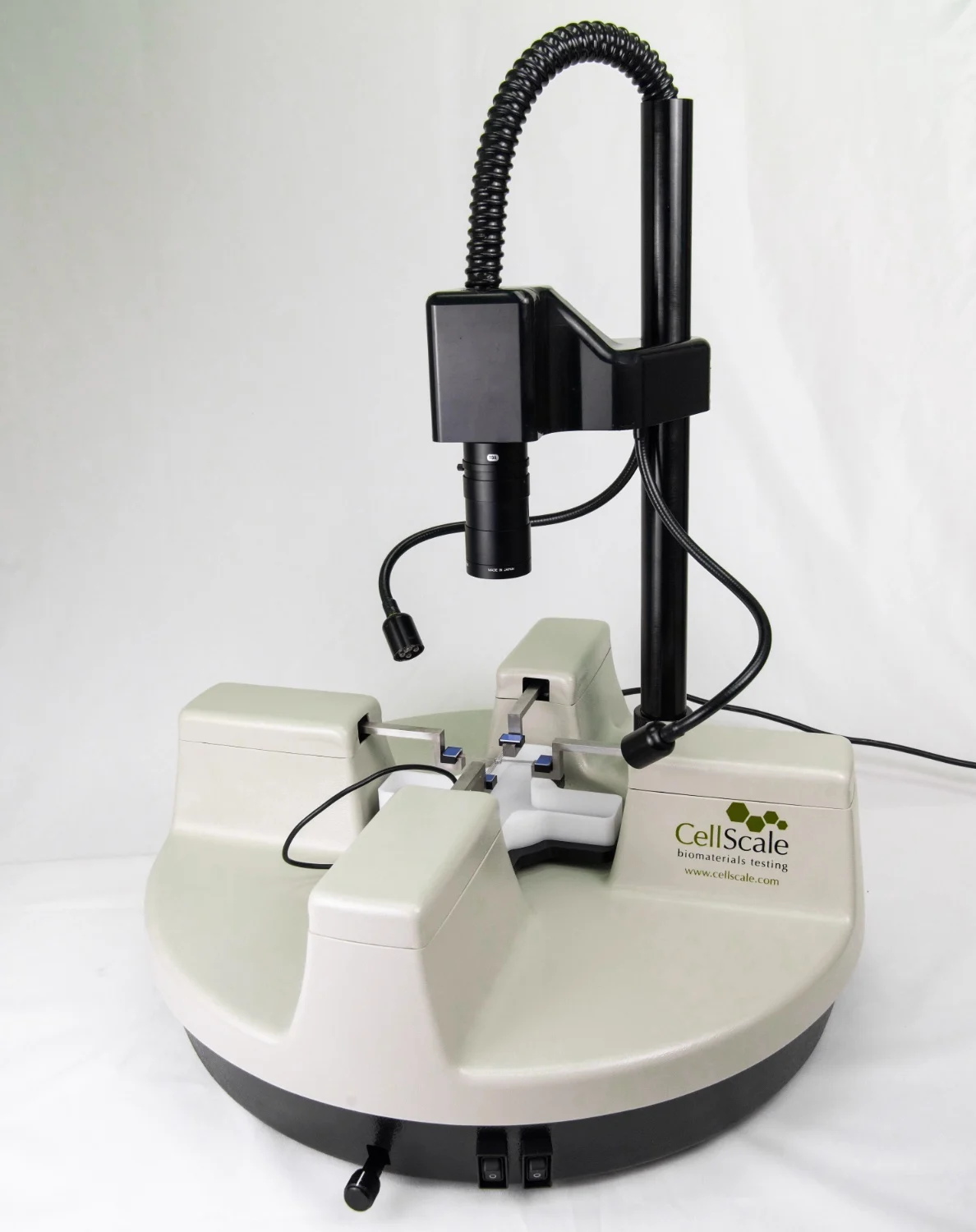
BioTester
Planar biaxial biomechanical testing system for anisotropic tissues and biomaterials, supporting equibiaxial and non-equibiaxial protocols (from 0.5N to 200N force capacity) with hydrated testing.
Teaching lab? Explore the UniVert Classroom Kit
Accessories and Software That Expand Benchtop Mechanical Tester Workflows
A key advantage of our research-focused mechanical testing systems is the ability to expand capability without replacing the base frame.
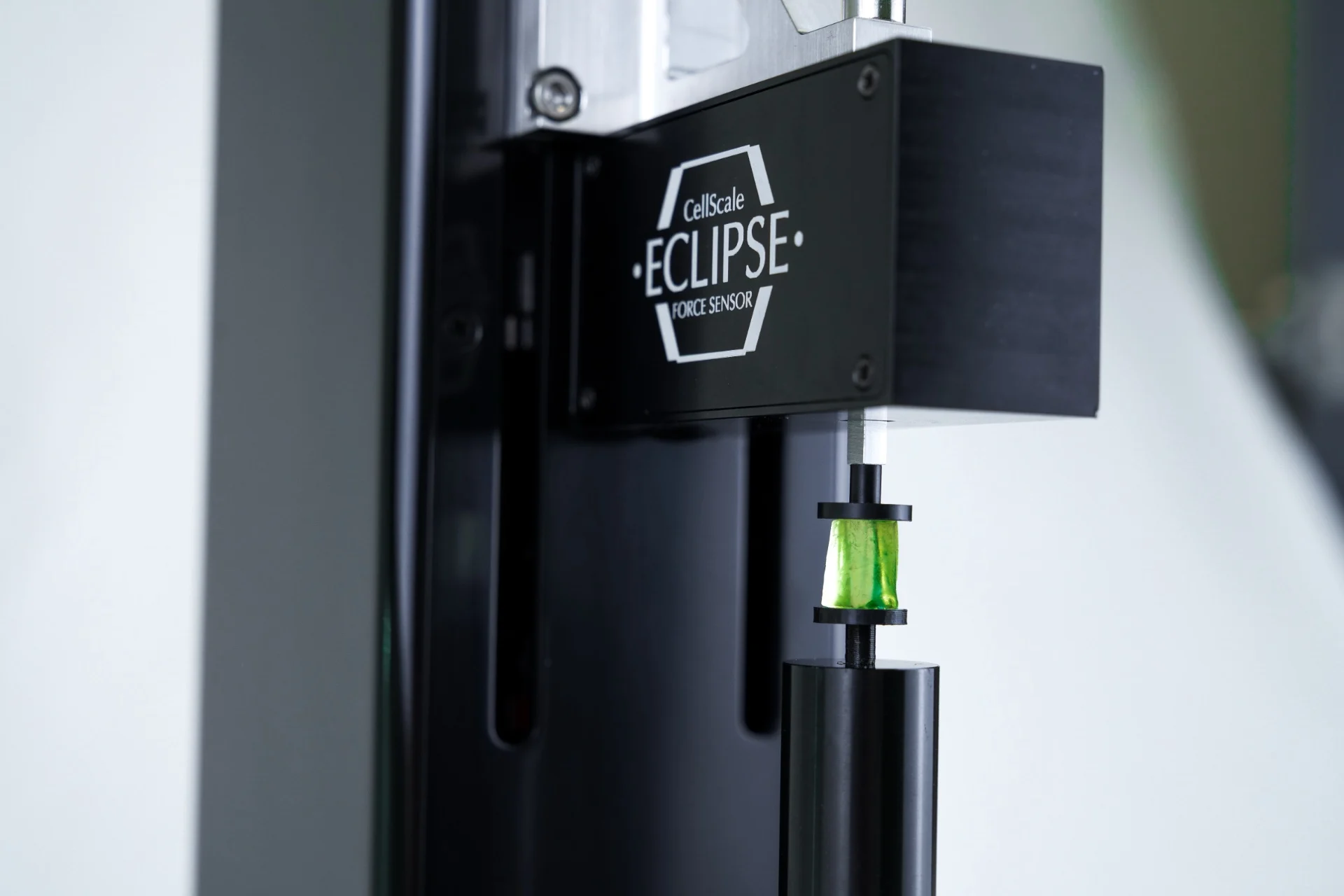
Eclipse Ultra-Low Force Sensor
The Eclipse supports ultra-low force work (down to 0.02N) for delicate specimens and protects against overload in protocols that push into the lowest force regimes. If your experiments need low-force mechanical testing at a scale a little larger than what the MicroTester excels at, then using the Eclipse with the UniVert is a great way to make those measurements practical and repeatable.
XY Stage
The XY Stage improves positioning and alignment workflows, especially when fixture setup and consistent placement affect repeatability. For labs treating UniVert as a primary benchtop mechanical tester, the XY Stage can reduce setup variability across operators and specimen batches.
Data Analysis Software
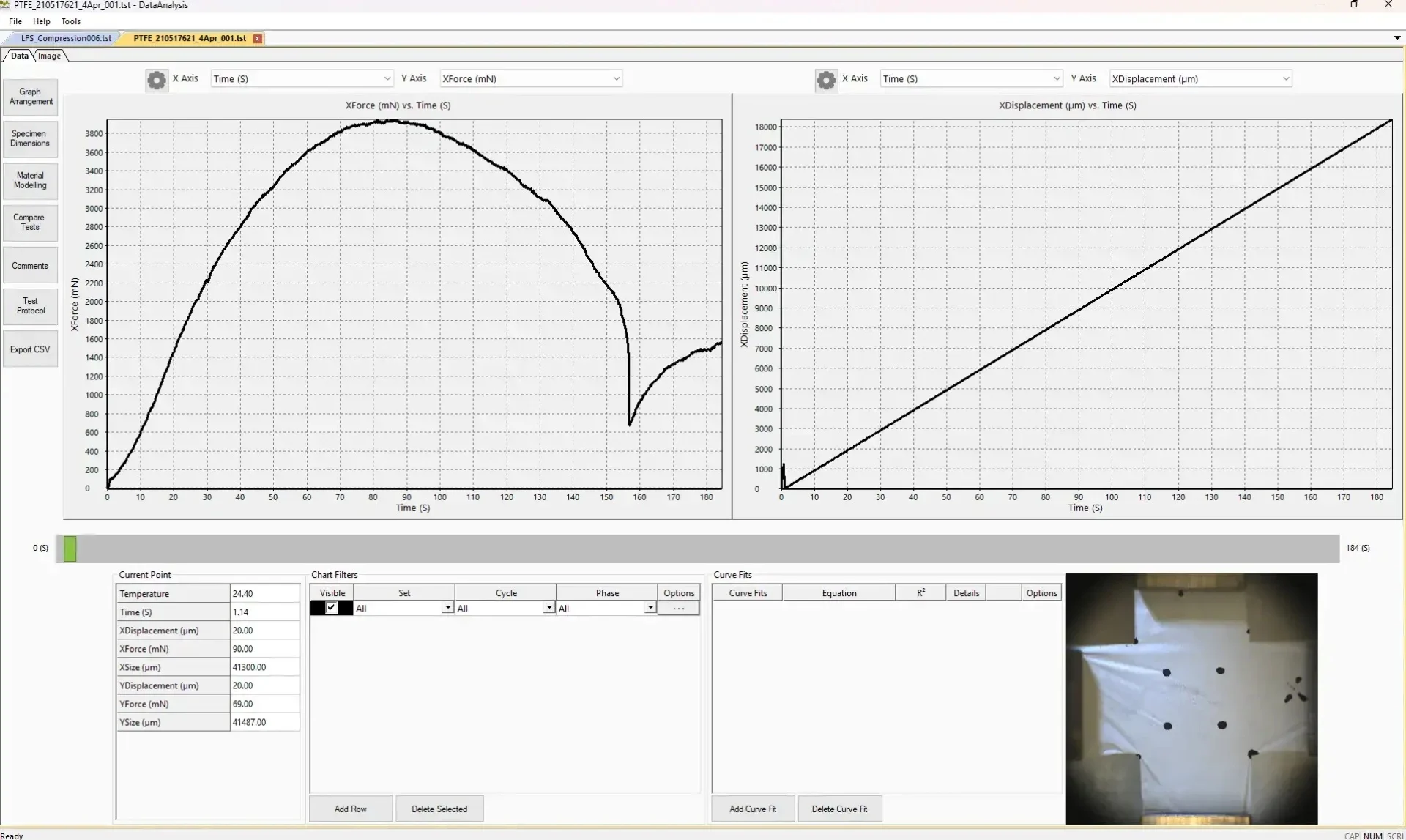
Post-test analysis matters as much as acquisition when you are comparing cohorts, materials batches, or protocol variants. CellScale provides a lifetime license to our Data Analysis software with our mechanical testers. This software supports curve review, test-to-test comparisons, and reporting outputs suited to research documentation, especially when imaging-based strain measurement is part of the workflow.
Relevant Testing Methods
The right mechanical tester choice often depends on the test method, specimen geometry, and whether you need imaging-based strain. Explore the testing method pages below for protocol-level guidance that applies across a benchtop mechanical tester, micro-scale platforms, and biaxial setups.
- See All Testing Methods
FAQs About Mechanical Testers
Which benchtop mechanical tester should I choose?
If you need broad uniaxial capabilities, start with the UniVert. If your samples are micro-scale or require very small forces, the MicroTester is often better suited. If you need two-axis loading for anisotropic tissues, the BioTester is the appropriate benchtop mechanical tester platform.
Can these mechanical testing systems run hydrated experiments?
If you need broad uniaxial capabilities, start with the UniVert. If your samples are micro-scale or require very small forces, the MicroTester is often better suited. If you need two-axis loading for anisotropic tissues, the BioTester is the appropriate benchtop mechanical tester platform.
When is low-force mechanical testing essential?
If you need broad uniaxial capabilities, start with the UniVert. If your samples are micro-scale or require very small forces, the MicroTester is often better suited. If you need two-axis loading for anisotropic tissues, the BioTester is the appropriate benchtop mechanical tester platform.
What makes a biomechanical testing system different for soft tissue research?
If you need broad uniaxial capabilities, start with the UniVert. If your samples are micro-scale or require very small forces, the MicroTester is often better suited. If you need two-axis loading for anisotropic tissues, the BioTester is the appropriate benchtop mechanical tester platform.
Explore CellScale Mechanical Testing Systems
Whether you are selecting a mechanical testing machine for a new lab or replacing a legacy materials testing machine, the goal is the same: reliable measurements on soft, hydrated, and time-dependent specimens. Explore the three CellScale mechanical testing machines and choose the platform that matches your specimen scale and loading mode: