
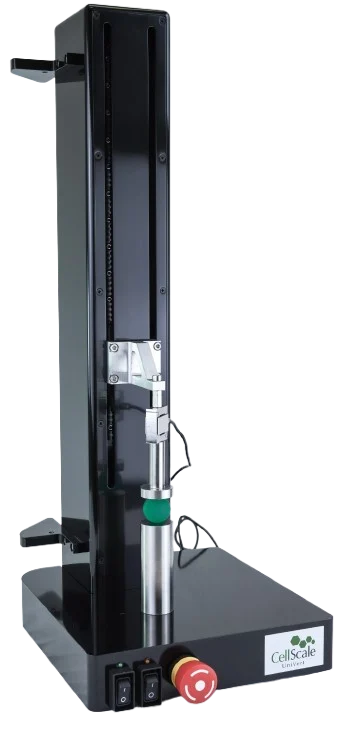
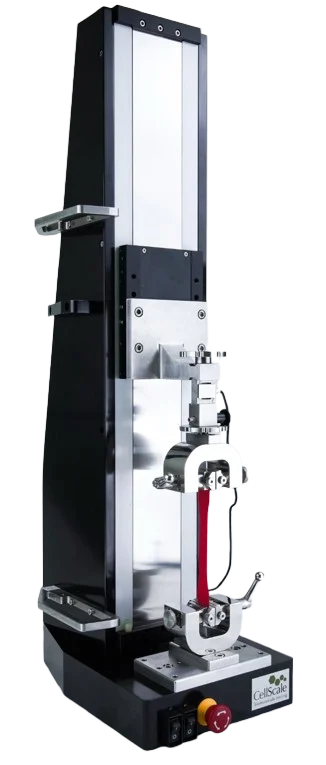
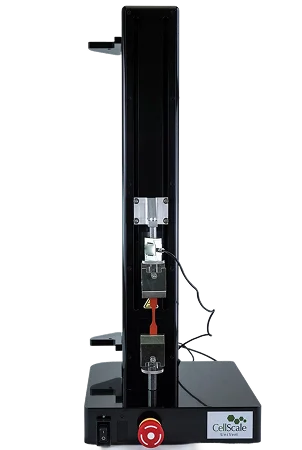
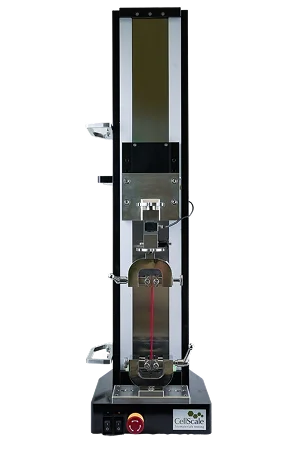

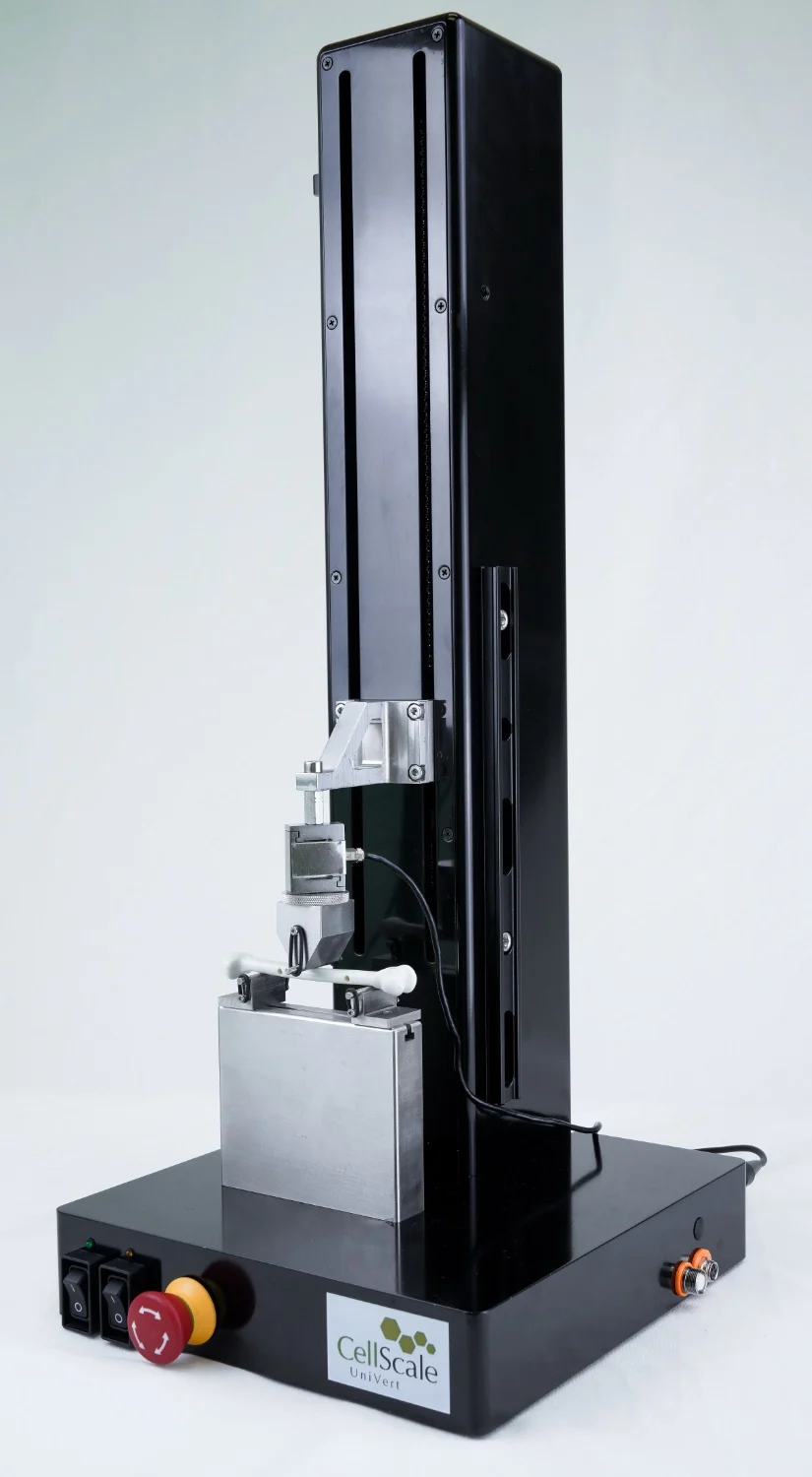
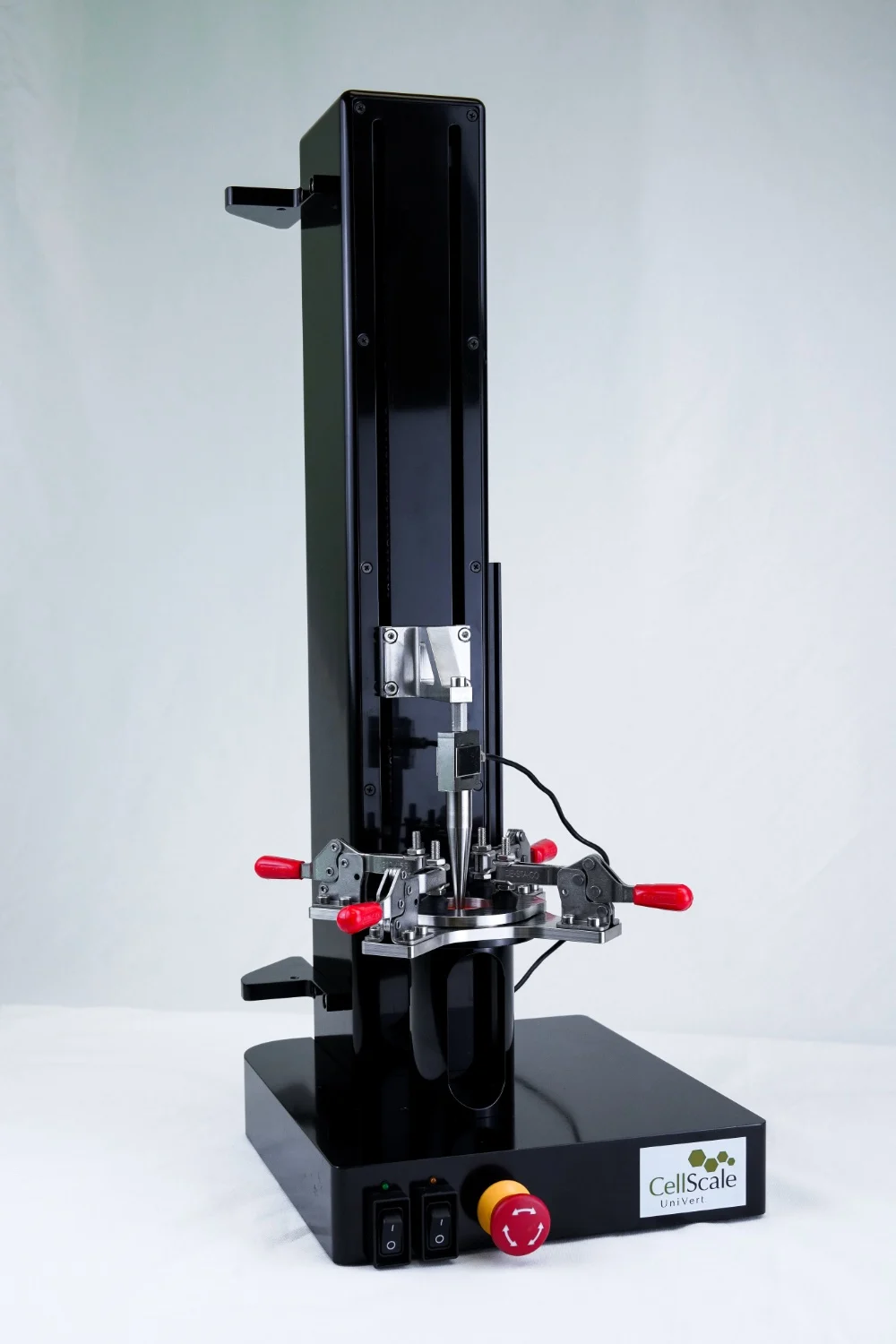
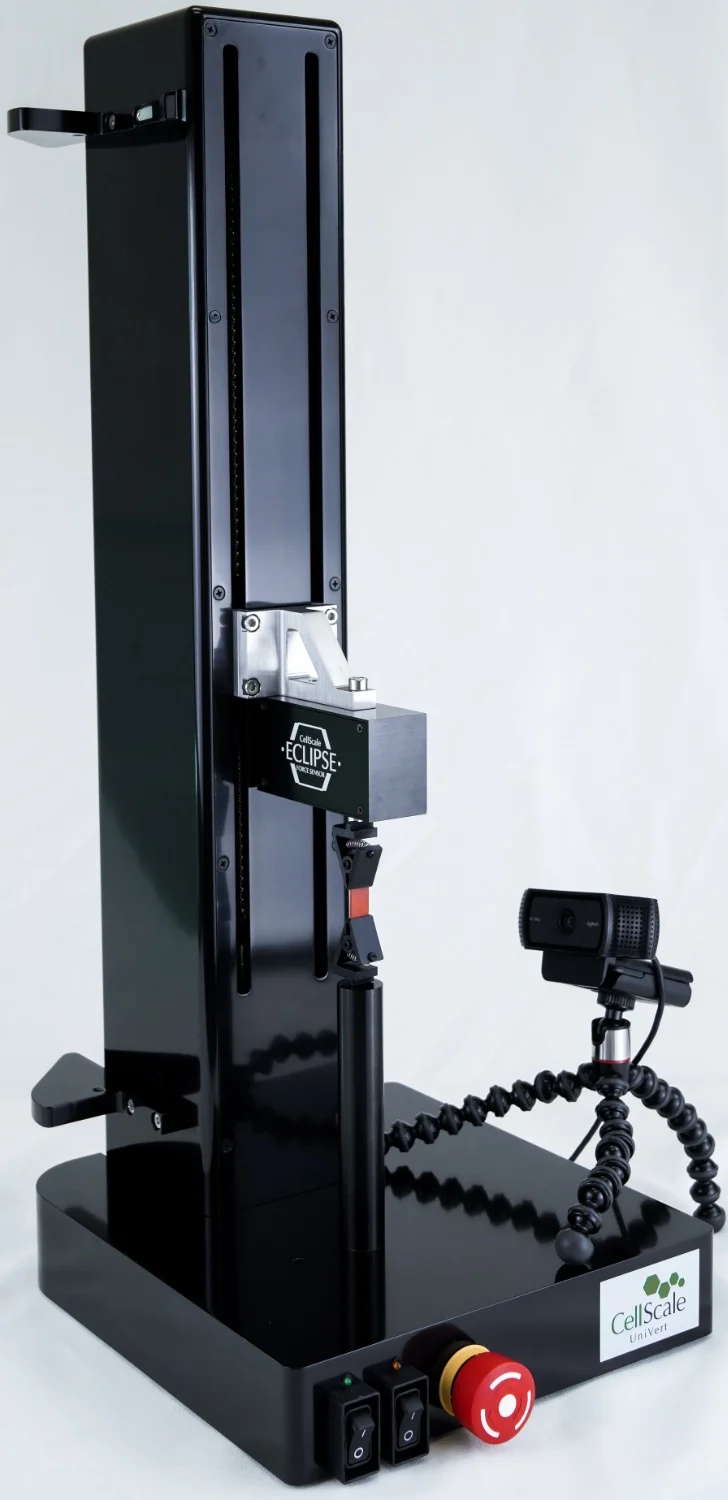
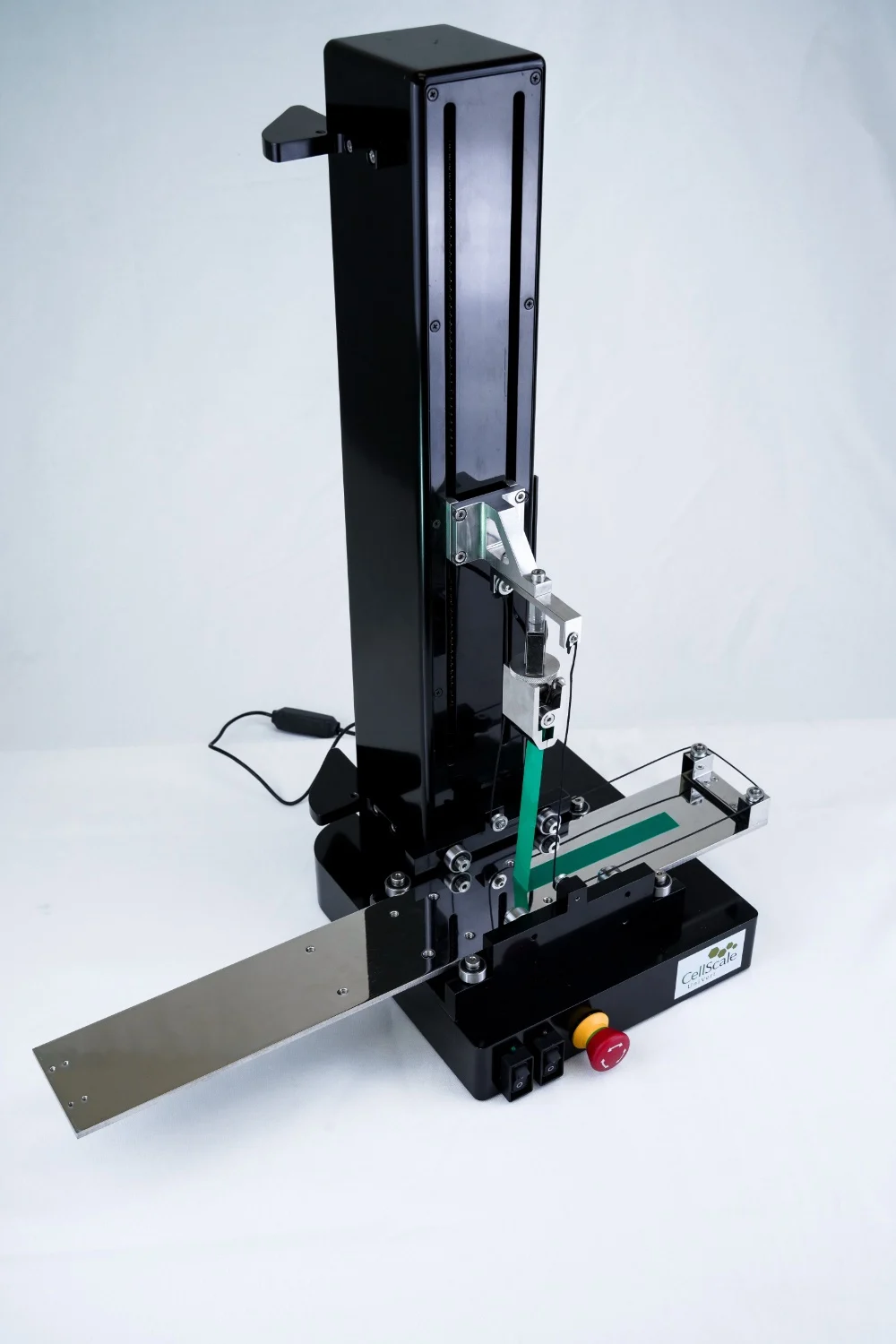
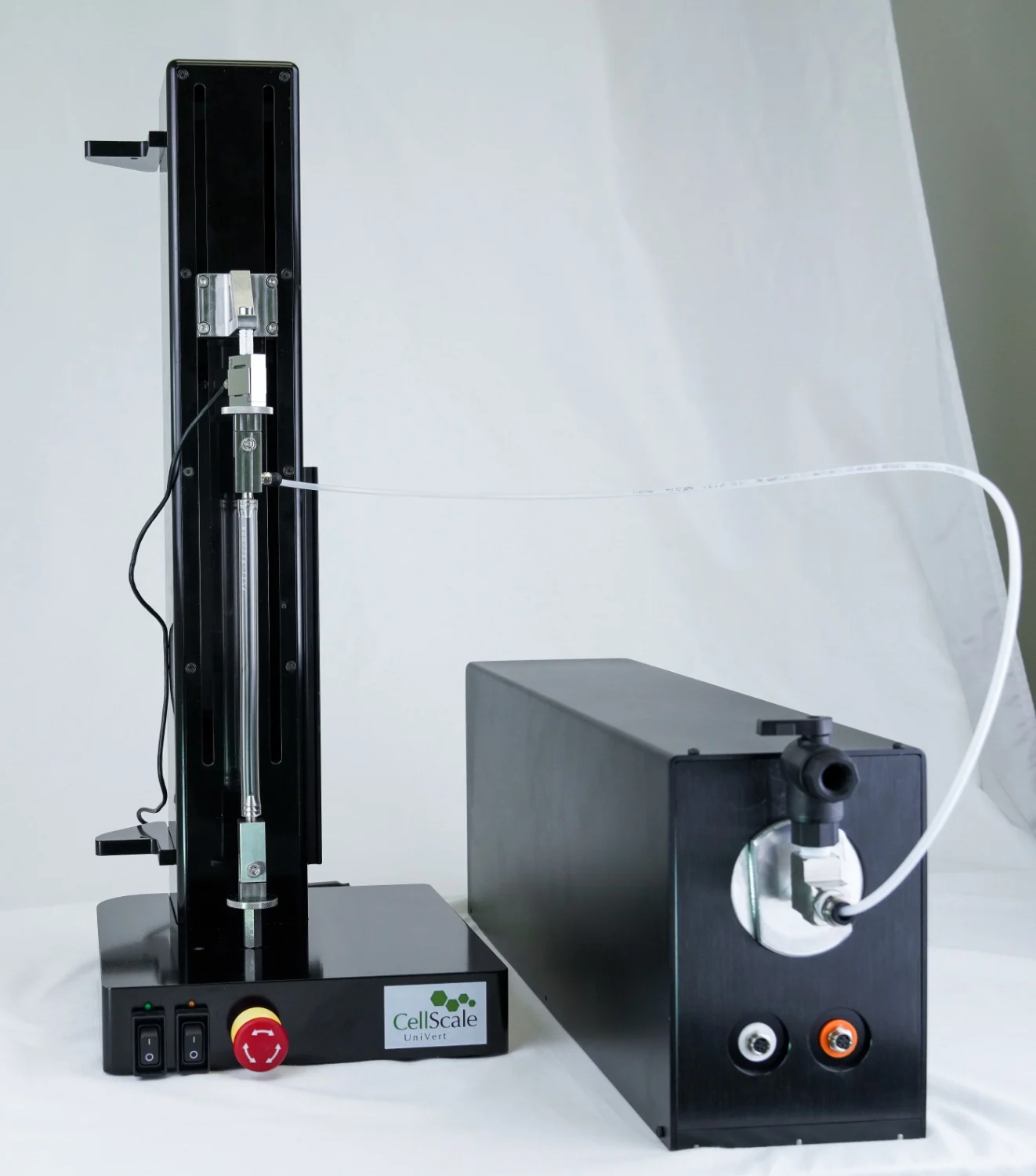
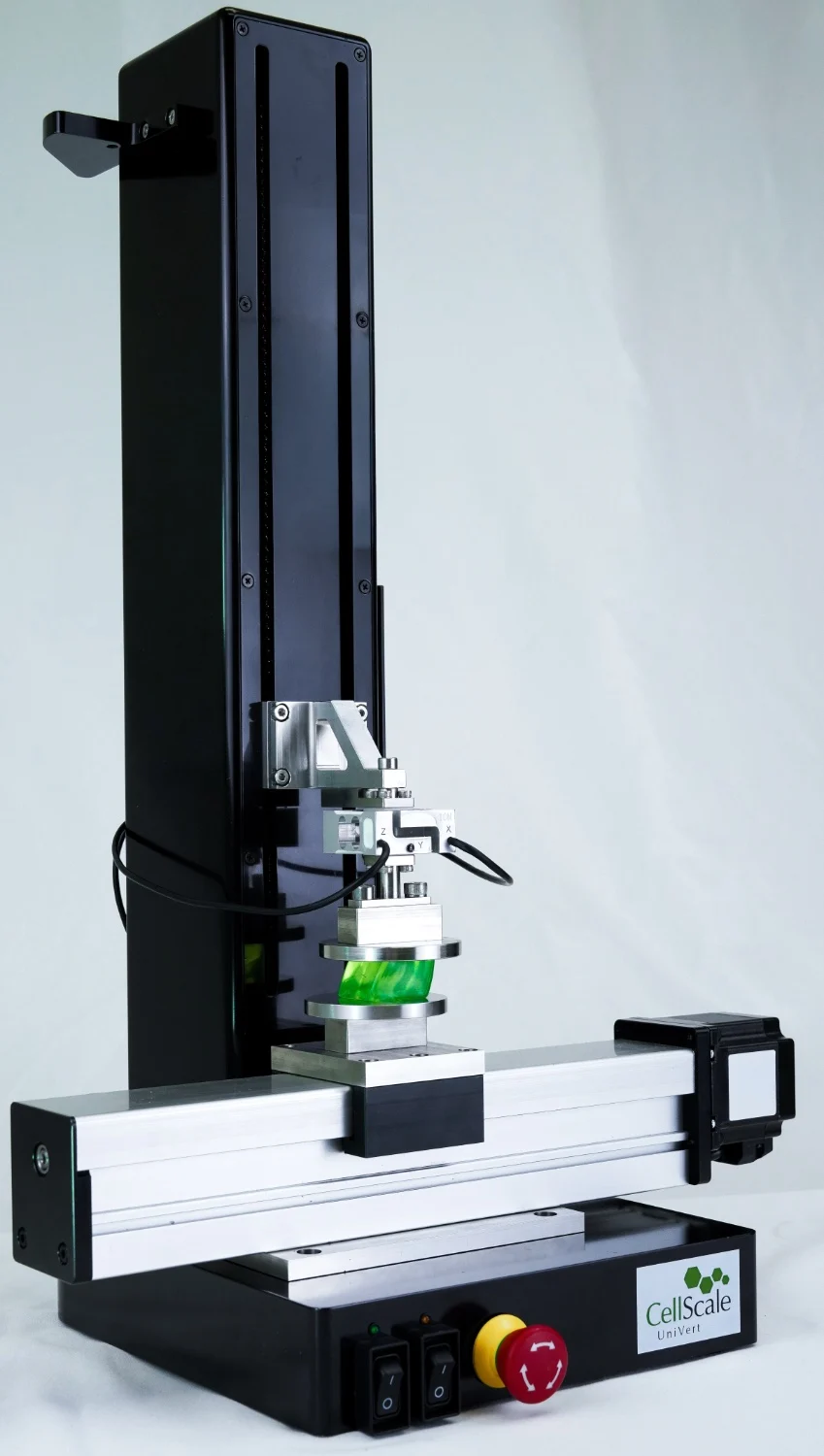
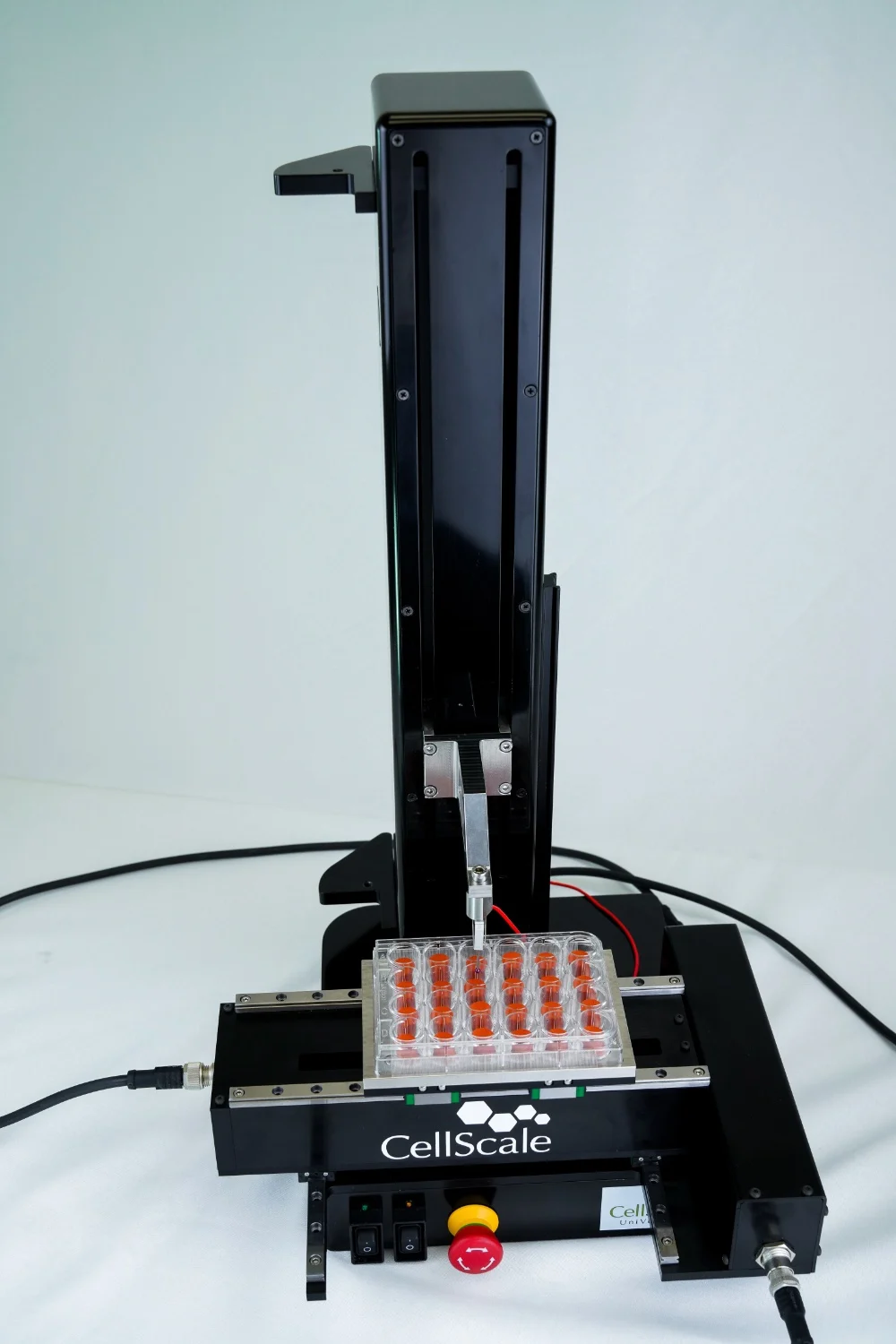
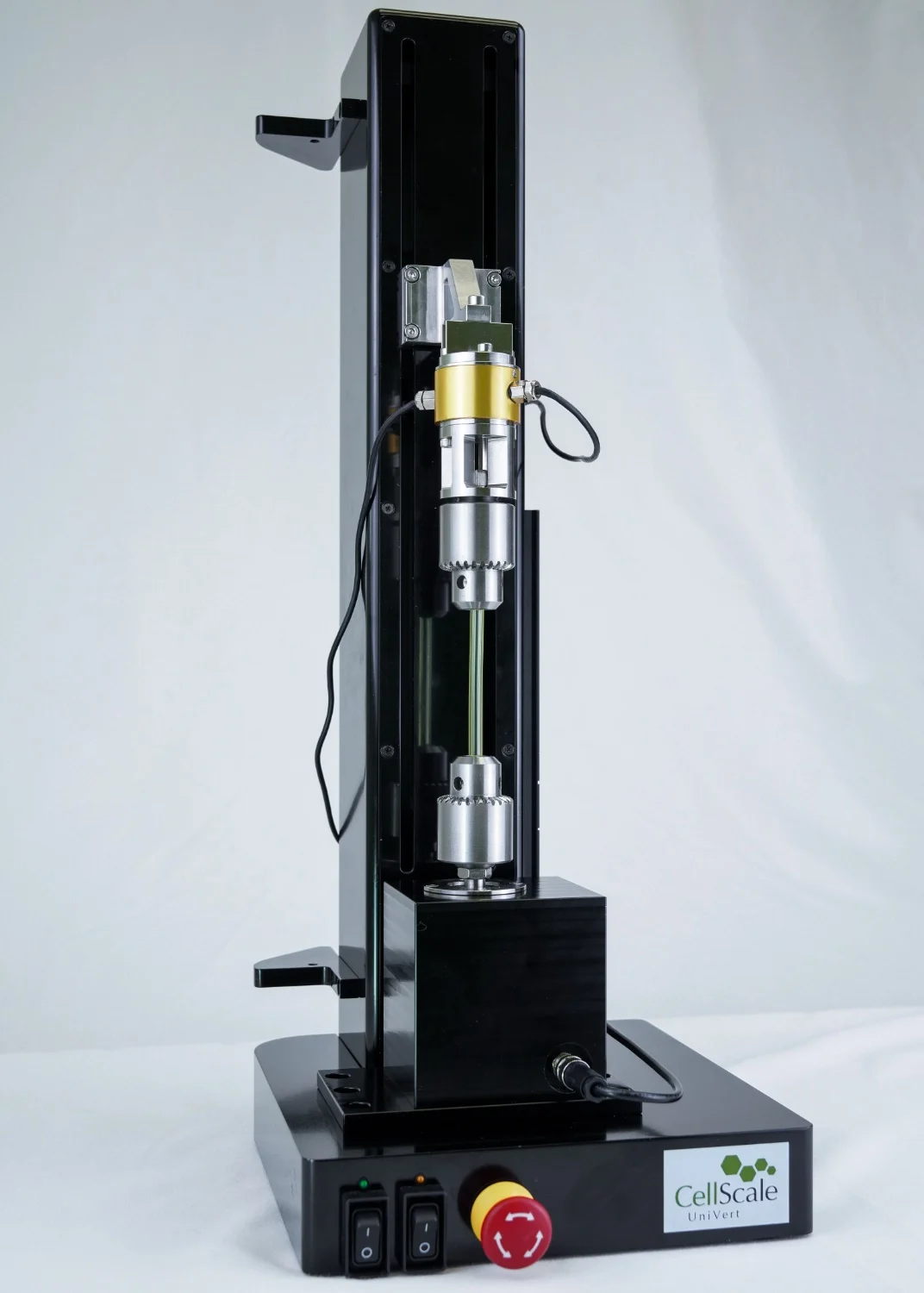
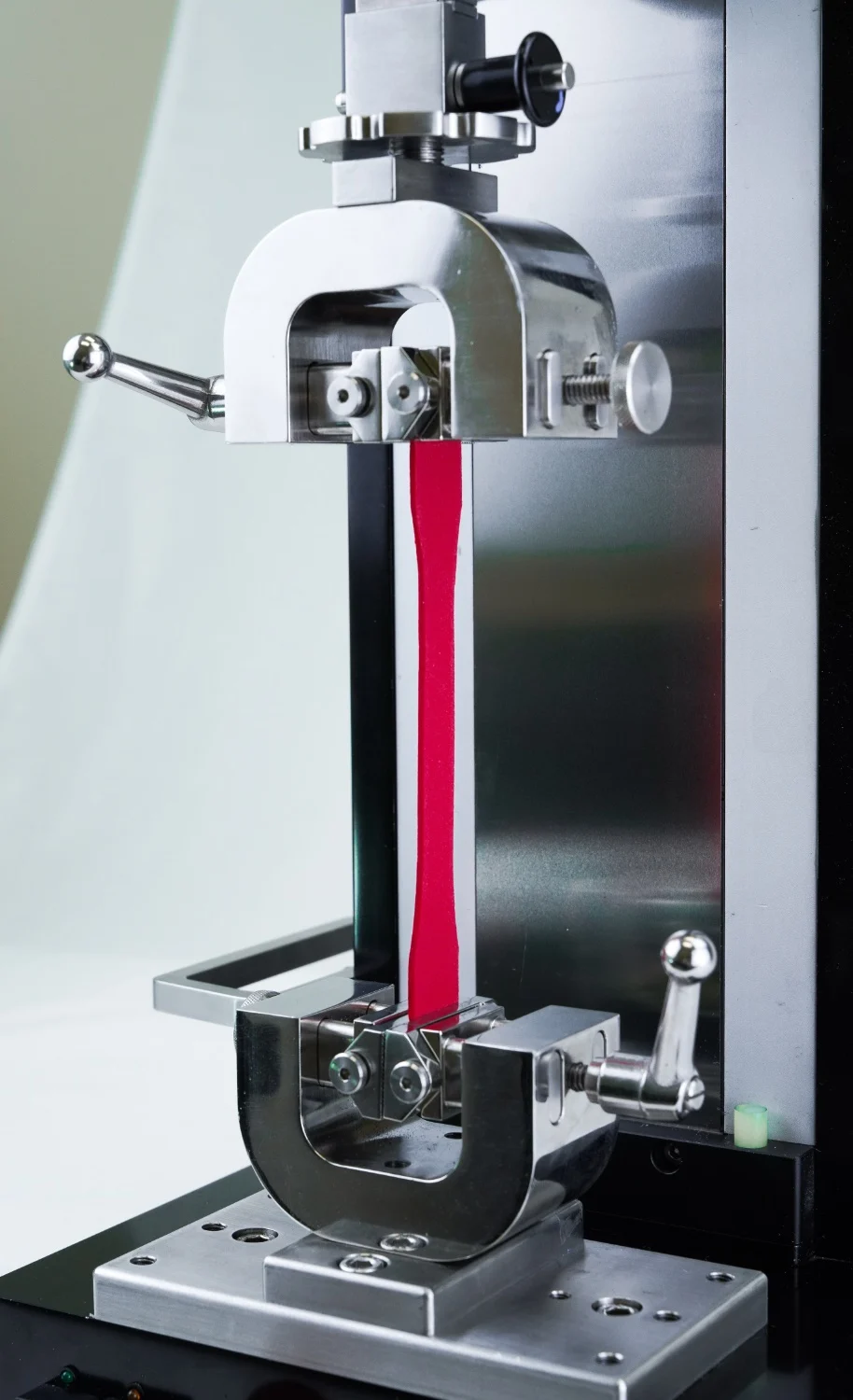




UniVert
Uniaxial Mechanical Testing System
- Versatile benchtop mechanical tester
- Uniaxial mechanical testing of soft tissues and engineered constructs
- Force sensitivity from 0.02N to 1kN, with interchangeable load cells
- Imaging-ready workflows coupled with hydrated and temperature-controlled testing
- Modular upgrades and multi-axis options available
“The UniVert is a workhorse and so versatile that it enables us to obtain data quickly and in an expedient manner.”
David Mills, PhD in Anatomy & Cell Biology – Professor at Louisiana Tech University
Overview
Uniaxial Mechanical Testing System for
Biomaterials and Soft Tissues
The UniVert series of test systems is optimized for biomaterials and tissues that require a low-force mechanical testing system with high sensitivity, unlike most conventional mechanical testers. Soft, hydrated, anisotropic, slippery, and irregularly shaped materials demand careful mounting, appropriate measurement sensitivity, and test workflows that can separate true specimen response from fixture artifacts.
From tensile and compression testing of biomaterials to multi-phase conditioning, time-dependent protocols, auxiliary axes, and strain-controlled mechanical testing using imaging-based workflows, the UniVert uniaxial mechanical testing system adapts to your specimens and methods rather than forcing you into a single test configuration.
What The UniVert Is Designed For
- Hydrogels, elastomers, scaffolds, and other compliant polymers
- Soft tissues including connective, vascular, pleural, nervous, and cartilaginous specimens
- ECM and decellularized matrices with non-uniform deformation
- 3D bioprinted structures and bioink-derived constructs
- Small orthopedic, dental, and biomedical components requiring controlled uniaxial or multi-axial loading
- Small, soft samples for general-purpose materials mechanics testing
When the UniVert is the Right Choice
- Low-force tension/compression where signal-to-noise matters
- Soft, hydrated, slippery specimens where grips and fixtures drive repeatability
- Cyclic conditioning and fatigue-style protocols on compliant materials
- Imaging-based strain measurement because crosshead displacement is not always an accurate representation of strain
Typical Experimental Environments
- Uniaxial tensile and compression testing across soft polymers and biomaterials, commonly using matched grips/platens and straightforward ramp protocols for hydrogels, elastomers, injectable biomaterials, and thin constructs.
- Cyclic conditioning and fatigue-style durability experiments (repeatable waveforms and multi-phase sequences) for material fatigue and durability studies, including soft robotics materials and wearable bioelectronics substrates.
- Hydrated and temperature-controlled testing in liquid baths (often PBS/media and physiologic temperature when needed) to maintain hydration and improve reproducibility for hydrogels, ECM-derived materials, and tissue-like constructs.
- Application-specific fixture workflows with imaging context including peel/adhesion and membrane or thin-film mechanics, plus time-dependent ramp-and-hold sequences for viscoelastic response (stress relaxation and related protocols when required).
UniVert Models and Core Specifications
The UniVert is available in two force-capacity models that share the same workflow, fixture ecosystem, and software interface. Both UniVert models measure ultra-low forces for delicate tissues and hydrogels (down to ~0.02N with appropriate sensing), while the UniVert 1kN specifically supports higher-load benchtop protocols up to 1000N.
UniVert S
The UniVert S is used as a medium- to low-force mechanical testing system when delicate specimens require high resolution and careful overload protection. UniVert S provides a compact and configurable uniaxial mechanical testing system with a setup that can be built around specimen compliance and testing method requirements. It is commonly used with soft tissues (i.e., cardiac, muscle, connective, pleural), gels (like hydrogels and elastomers), scaffold materials, thin films (or membranes), and compliant polymers.
UniVert 1kN
The UniVert 1kN has a higher load capacity compared to the UniVert S, while keeping the same fixtures, accessories, imaging options, and environmental configurations. It’s unique as a benchtop mechanical tester still capable of higher-load protocols. Common applications include engineered constructs, device-oriented studies (i.e., medical devices, bioelectronics, soft robotics), and stiffer materials (like adhesives, sealants, and thin metals) that push a low-capacity setup toward its limits.
| Specification | UniVert S | UniVert 1kN |
|---|---|---|
| Dimensions (cm) | 22 x 22 x 54 | 30 x 22 x 60 |
| Weight (kg) | 8 | 20 |
| Force Capacity (N) | 200 | 1000 |
| Load Cell / Force Sensor Range (N) | 0.02 – 200 | 0.02 – 1000 |
| Force Accuracy | 0.2% of load cell capacity | 0.2% of load cell capacity |
| Stroke (mm) | 300* | 300* |
| Max Velocity (mm/s) | 20 (100) | 20 |
| Max Acceleration (m/s²) | 1 (2) | 1 |
| Max Cycle Frequency (Hz) | 2 (10) | 2 |
| Max Data Rate (Hz) | 100 (500) | 100 |
Mechanical Testing Capabilities
A UniVert system supports core uniaxial methods out of the box, and it can be extended into specialized workflows by adding auxiliary axes upgrades, fixtures, and load cells (when needed). This lets you keep one platform while expanding the range of protocols you run.
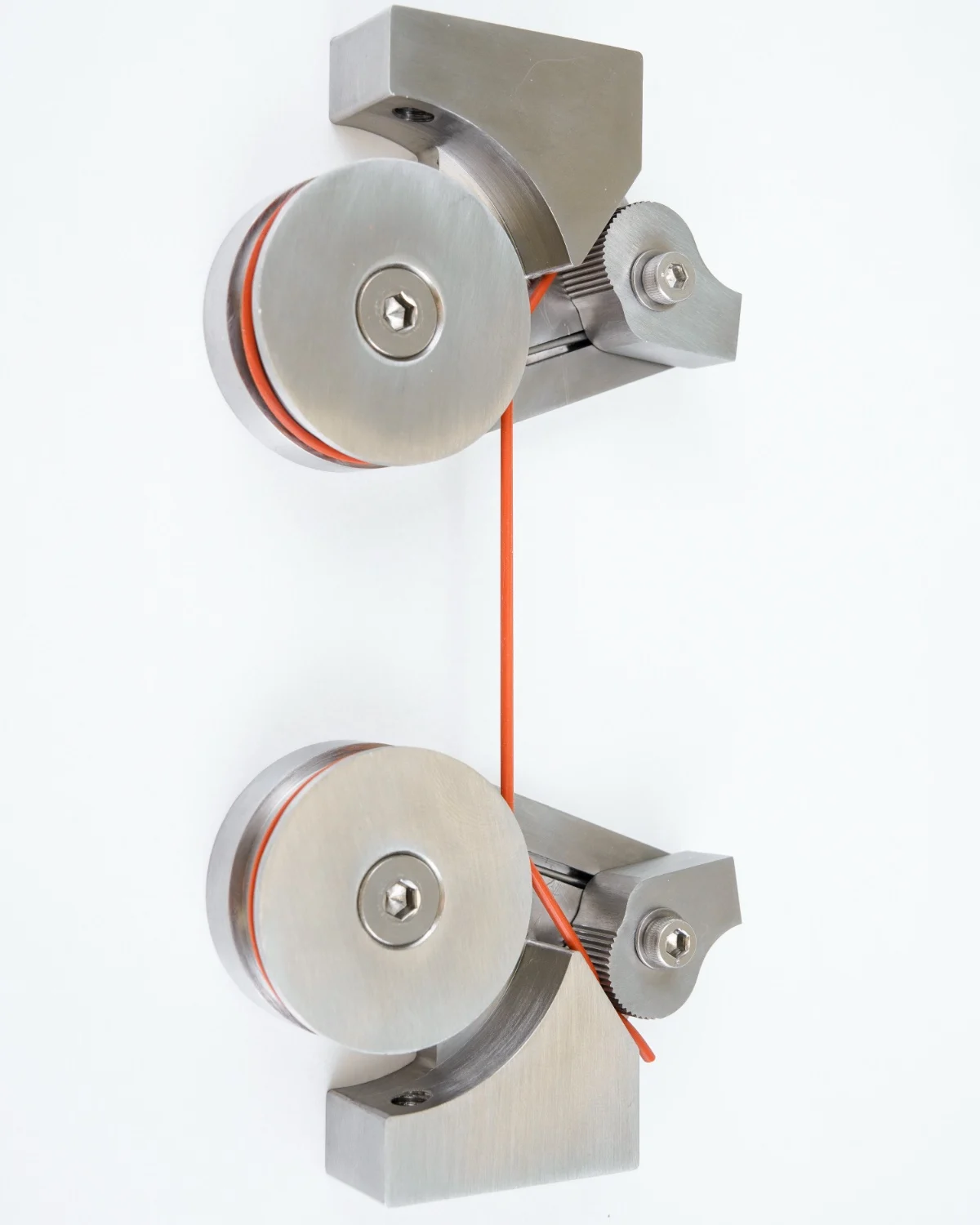
Tensile Testing
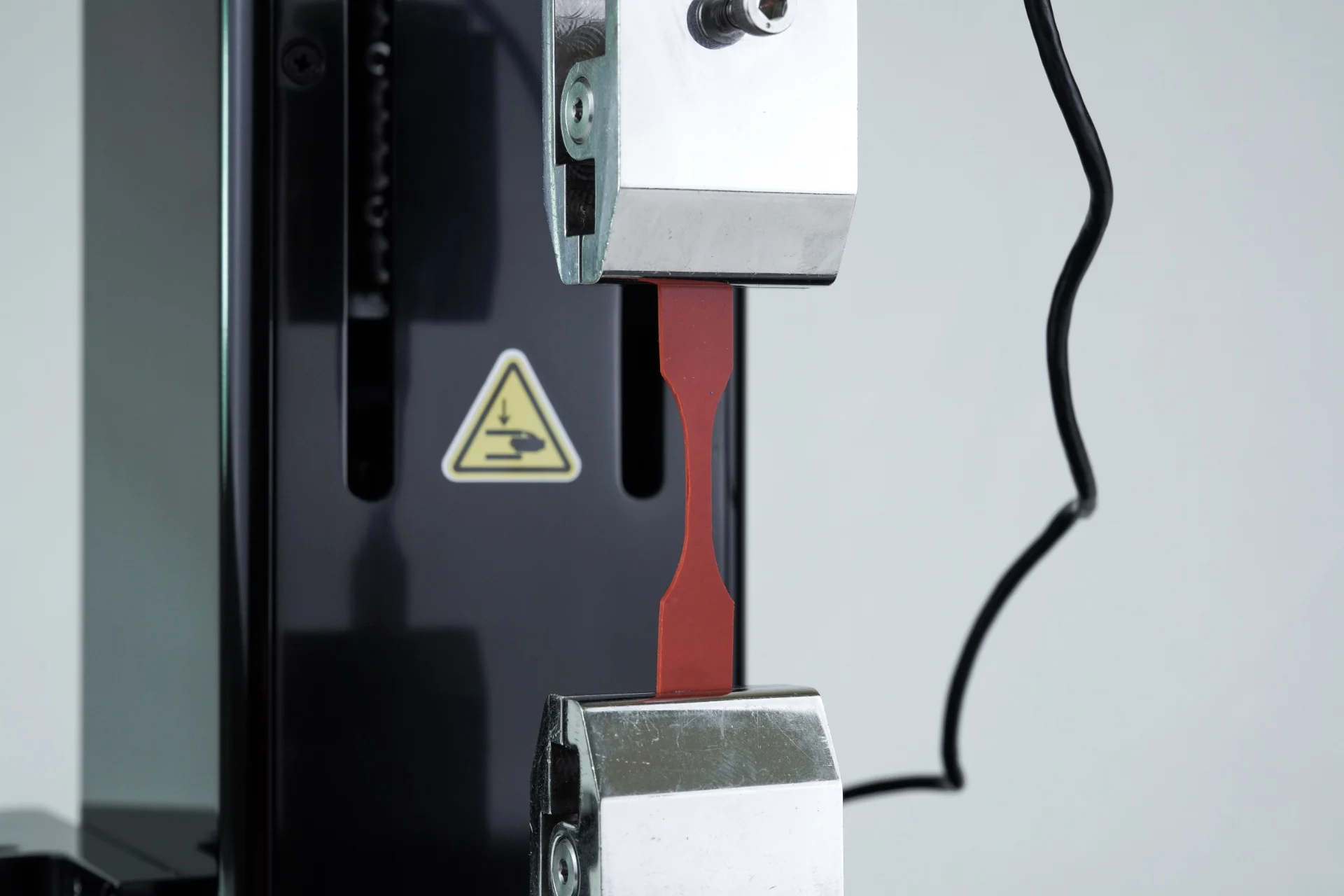
With the UniVert: Controlled uniaxial tension using displacement or force control, including ramp, hold, and cyclic sequences.
For biomaterials: Soft specimens often fail or slip at attachment sites, so repeatability is usually won or lost at the grips. Selecting the right fixture and using imaging can help separate true specimen response from grip effects and other artifacts.
Example specimens: soft tissues, hydrogels, thin membranes, elastomers
Related Research Applications (chips):
Hydrogel Mechanical Testing
Tendon and Ligament Tissue Engineering & Mechanics
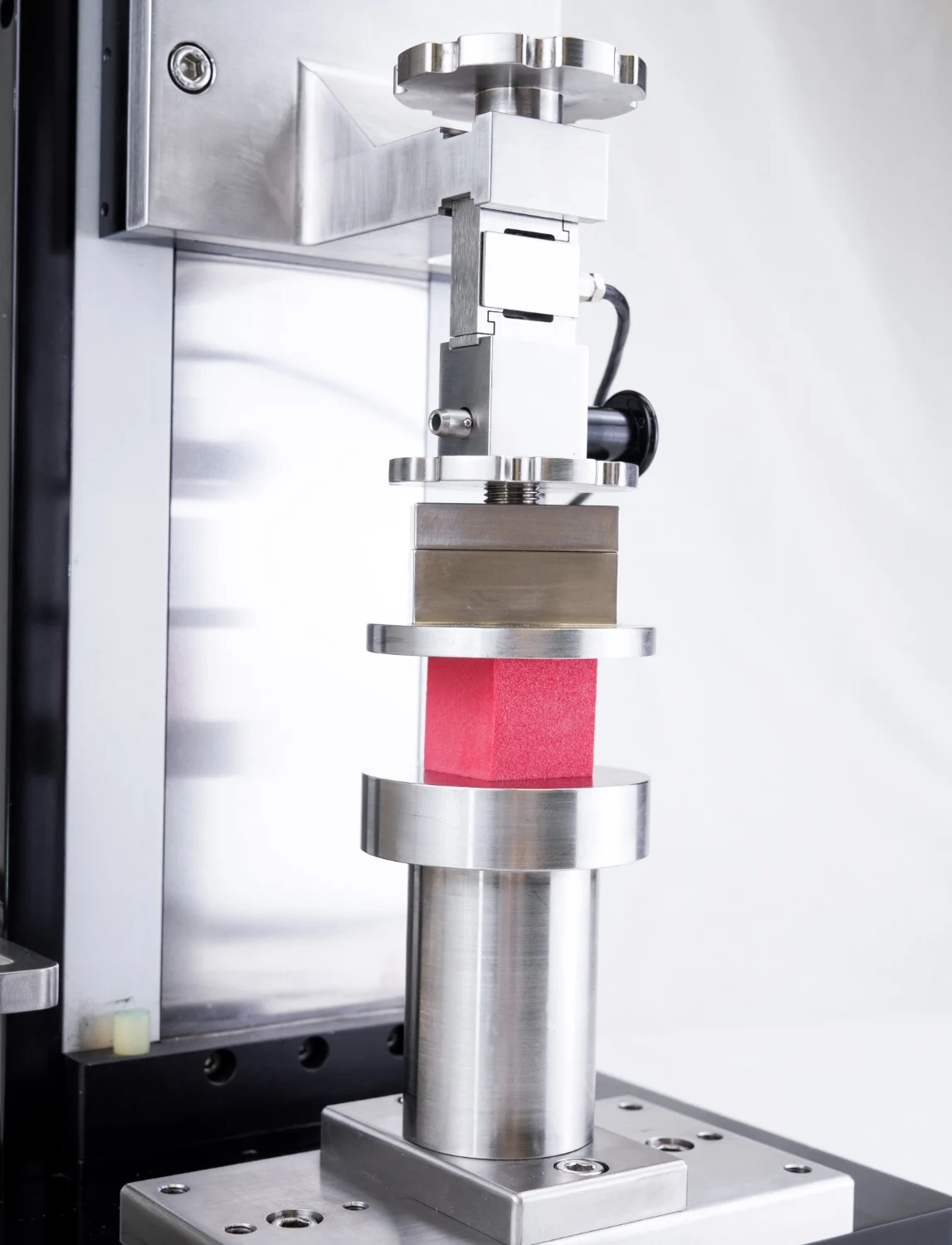
Compression Testing
With the UniVert: Parallel-plate compression protocols with optional holds for time-dependent response.
For biomaterials: Irregular geometries and non-heterogeneous mechanics are common, so the same displacement can represent very different local strains. Imaging context and platen selection can make deformation and failure easier to interpret.
Example specimens: hydrogels, cartilage plugs, porous scaffolds, compliant polymers
Related Research Applications (chips):
Cartilage and Meniscus Mechanics
ECM & Decellularized Matrix Mechanics
Ultra-Low Force Testing
With the UniVert: Low-force tensile, compression, and indentation workflows using the Eclipse ultra-low force sensor.
For biomaterials: Many biomaterials and biological tissues show small, treatment-driven changes that disappear in noise when force resolution is limited. Higher sensitivity reduces overload risk for fragile samples and improves confidence when you are comparing subtle mechanical differences across groups.
Example specimens: cell laden hydrogels, thin tissue sections, compliant membranes, micro-scale scaffolds
Related Research Applications (chips):
Cell Laden Hydrogels
Ophthalmic Biomechanics & Corneal Tissue Engineering
Flexural and Bending Testing
With the UniVert: Three-point bending configurations for beam-like samples.
For biomaterials: Geometry and alignment sensitivity are common. Stable fixtures and image context support repeatable stiffness and failure metrics.
Example specimens: small bone structures, bioinspired beams, device-scale components
Related Research Applications (chips):
Bone Tissue Engineering & Mechanics
Dental & Oral Tissue Biomechanics
Peel Testing
With the UniVert: Interfacial mechanics and adhesion measurements using peel-style fixtures and controlled loading.
For biomaterials: Adhesion is often strongly influenced by humidity, temperature, and surface hydration. Stable fixturing plus hydrated mechanical testing and environmental control options helps improve comparability across conditions and materials.
Example specimens: adhesives, sealants, bonded membranes, soft laminates
Related Research Applications (chips):
Adhesives and Sealants Testing
Membranes and Thin Films Mechanics
Puncture Testing
With the UniVert: Localized penetration and membrane integrity testing using puncture fixtures with controlled displacement or force.
For biomaterials: Many biological barriers and thin biomaterials fail through localized damage. Puncture tests help quantify strength and failure behaviour when bulk tension or compression is not representative.
Example specimens: thin hydrogels, skin-like tissues, membranes, thin films
Related Research Applications (chips):
Reproductive and Fetal Membrane Mechanics
Skin and Wound Healing Biomechanics
Fatigue Testing
With the UniVert: Cyclic loading protocols for repeatable deformation under controlled waveform and amplitude settings. When configured for cycling, the UniVert functions as a cyclic mechanical testing system.
For biomaterials: Many tissues and implant materials experience repetitive in vivo loading. Fatigue protocols help quantify changes in stiffness, hysteresis, and failure risk over time, and they can be paired with preconditioning and recovery phases to reflect how specimens evolve during testing.
Example specimens: musculoskeletal tissues, elastomers, engineered constructs, soft implant materials
Related Research Applications (chips):
Material Fatigue and Durability
Musculoskeletal Tissue Engineering & Mechanics
Viscoelastic & Time-Dependent Testing
With the UniVert: Protocols for hysteresis, rate sensitivity, and time-dependent response using controlled ramps and holds in tension or compression. This includes creep and stress-relaxation tests.
For biomaterials: Viscoelasticity can dominate hydrogel and tissue behaviour, so small differences in timing and environment can shift results. Consistent hold durations, stable conditions, and low-noise force measurement improve comparisons across formulations and treatments.
Example specimens: hydrogels, dermal tissue, engineered matrices, elastomers
Related Research Applications (chips):
Polymers and Elastomers Testing
Skin and Wound Healing Biomechanics
Hydrated and Temperature Controlled Testing
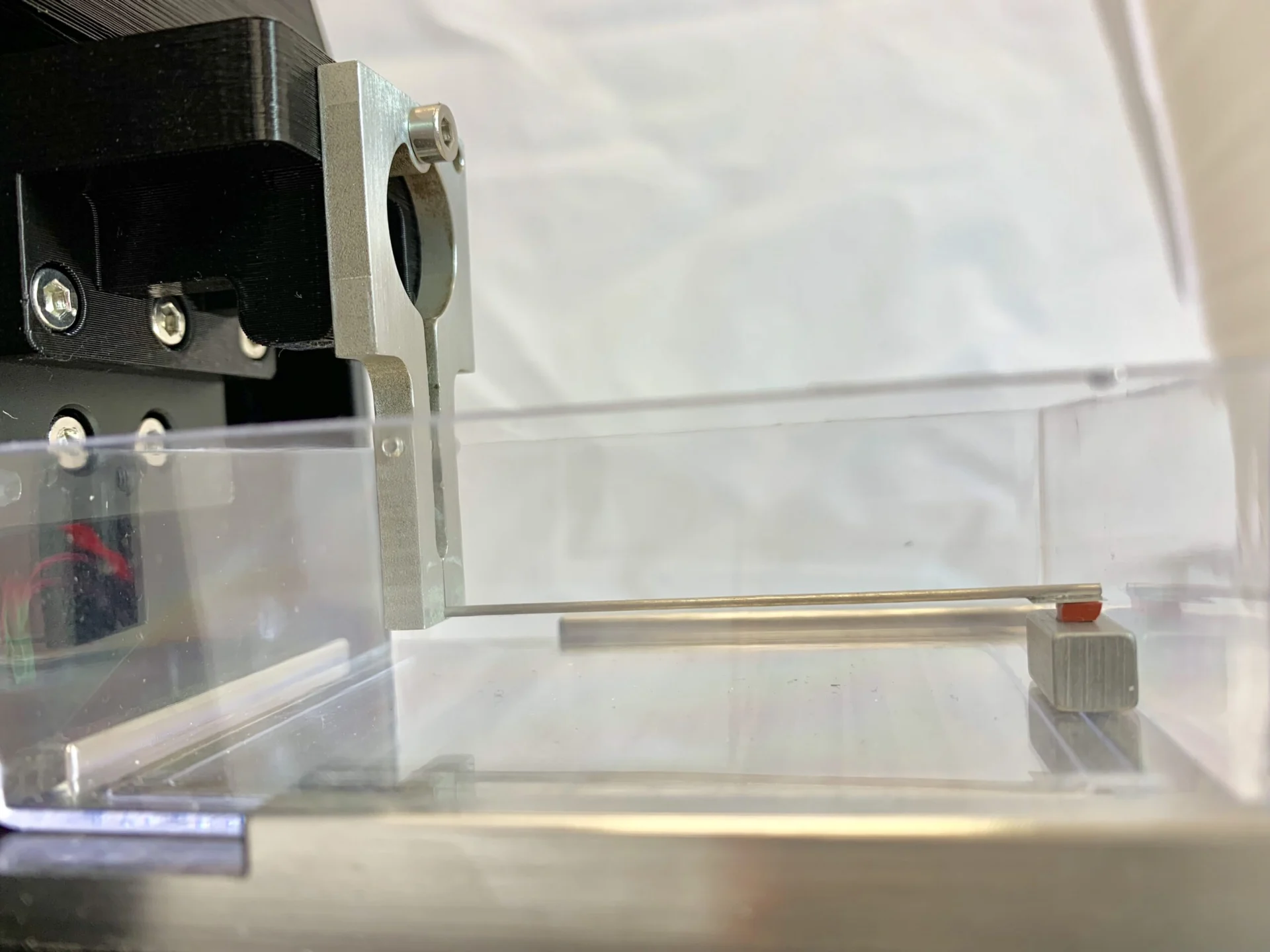
With the UniVert: Hydrated mechanical testing workflows using temperature-controlled liquid bath configurations.
For biomaterials: Hydration state and temperature can shift measured stiffness, viscoelastic response, and failure behaviour. Tight control improves reproducibility and supports more physiologically relevant protocols.
Example specimens: soft tissues, hydrogels, ECM and decellularized matrices, engineered tissue constructs
Related Research Applications (chips):
Vascular Tissue Engineering & Mechanics
Hydrogel Mechanical Testing
Digital Image Correlation (DIC)
With the UniVert: Non-contact strain measurement and, when configured, strain field mapping for complex deformation using imaging-based workflows.
For biomaterials: Non-uniform strain, grip effects, and localized deformation are common, especially in soft or heterogeneous samples. DIC-based measurement reduces reliance on crosshead displacement and supports more defensible comparisons of true specimen strain.
Example specimens: soft tissues with heterogeneous strain, hydrogels with localized deformation, thin membranes, engineered constructs
Shear Testing
With the UniVert: Shear loading protocols when configured with an optional shear axis and compatible fixtures.
For biomaterials: Shear response can be more physiologically relevant than uniaxial loading for cartilage, tissue interfaces, and engineered constructs where sliding or shear deformation dominates.
Example specimens: cartilage and meniscus tissues, soft tissue interfaces, layered biomaterials
Torsion Testing
With the UniVert: Rotational or torque-driven protocols when configured with an optional torsion axis and axial loading.
For biomaterials: Many biological structures experience twisting loads in vivo. Torsion testing supports more realistic mechanical characterization where axial tests alone do not capture the dominant deformation mode.
Example specimens: bone-related specimens, musculoskeletal constructs, bioinspired composites
Related Research Applications (chips):
Bone Tissue Engineering & Mechanics
Musculoskeletal Tissue Engineering & Mechanics
Pressure Testing
With the UniVert: Pressurization protocols for tubular or enclosed specimens when configured with an optional pressure axis.
For biomaterials: Tubular tissues and vascular biomaterials are often defined by compliance and failure behaviour under internal pressure. Pressure testing supports physiologically relevant loading and helps quantify structural integrity and treatment effects.
Example specimens: arteries, vascular grafts, tubular biomaterials, engineered vascular constructs
Related Research Applications (chips):
Vascular Tissue Engineering & Mechanics
Heart Valve Tissue Engineering & Mechanics
Force Range, Load Cells, and Measurement Sensitivity
A UniVert system supports core uniaxial methods out of the box, and it can be extended into specialized workflows by adding auxiliary axes upgrades, fixtures, and load cells (when needed). This lets you keep one platform while expanding the range of protocols you run.
When to choose UniVert S vs UniVert 1kN
- Choose UniVert S for low to medium force testing of soft tissues, hydrogels, elastomers, and most routine biomaterials workflows.
- Choose UniVert 1kN when higher loads are required for stiffer constructs, larger specimens, device components, or higher-force compression protocols.
Practical guidance for selecting a configuration
- Start with the smallest load cell range that comfortably covers expected peak loads (see the UniVert Catalog for force package options)
- We will match grips and platens with you, to fit specimen geometry and compliance
- Add a media bath upgrade for hydrated mechanical testing when hydration or temperature stability affects the response
- Use the standard (or upgraded) imaging when alignment, slip, or non-uniform deformation impacts repeatability
- Add the optional additional testing fixtures if needed for your research
Fixtures, Accessories, and System Upgrades
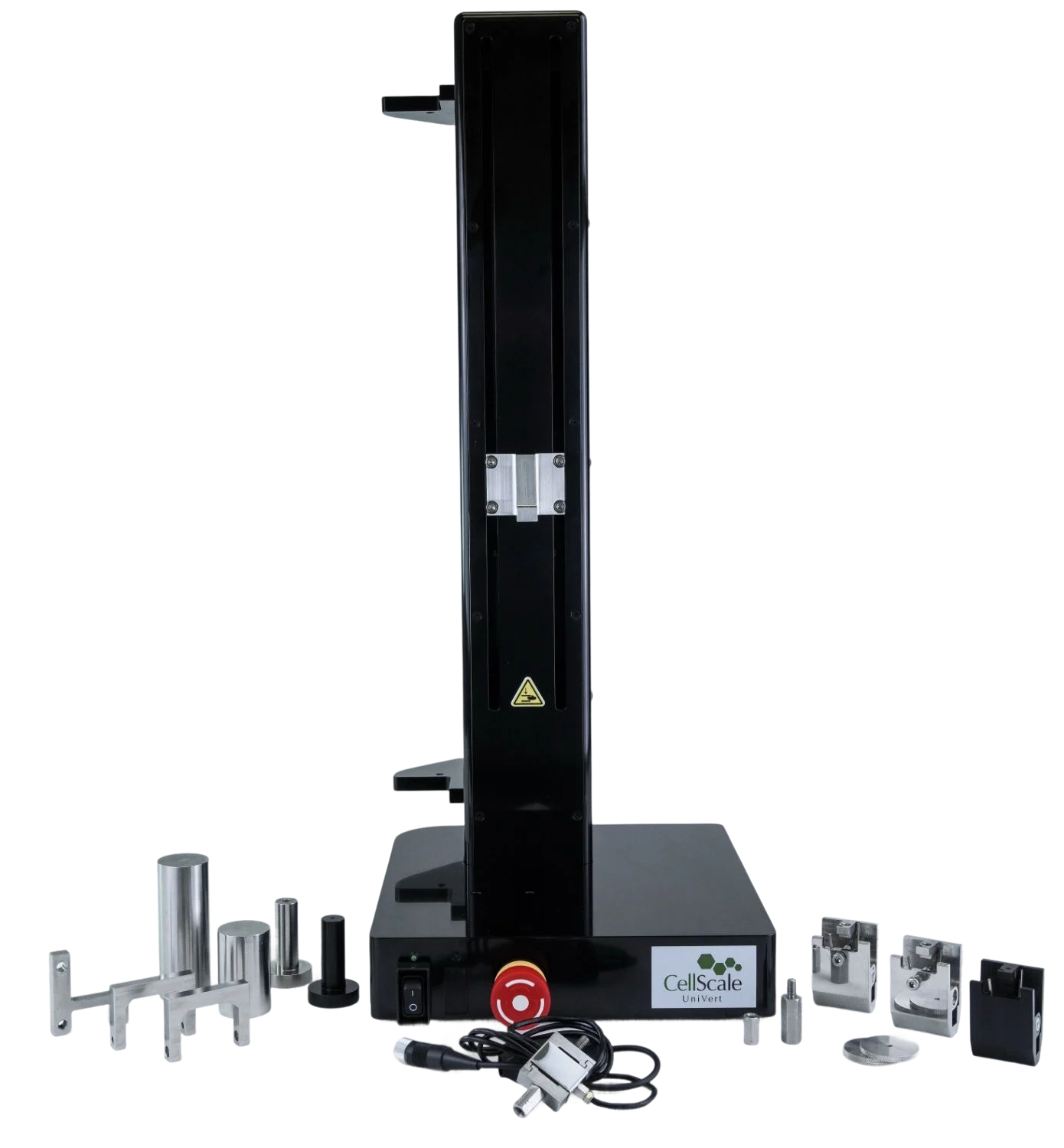
The UniVert is configurable to suit your research needs through system upgrades and the addition of interchangeable fixtures and accessories. Standard configurations center on tensile and compression testing of biomaterials, with grips and platens matched to specimen geometry and compliance.
Fixtures for Tensile and Compression Testing of Biomaterials
- Standard with the UniVert:
- Tension grips matched to specimen compliance and geometry
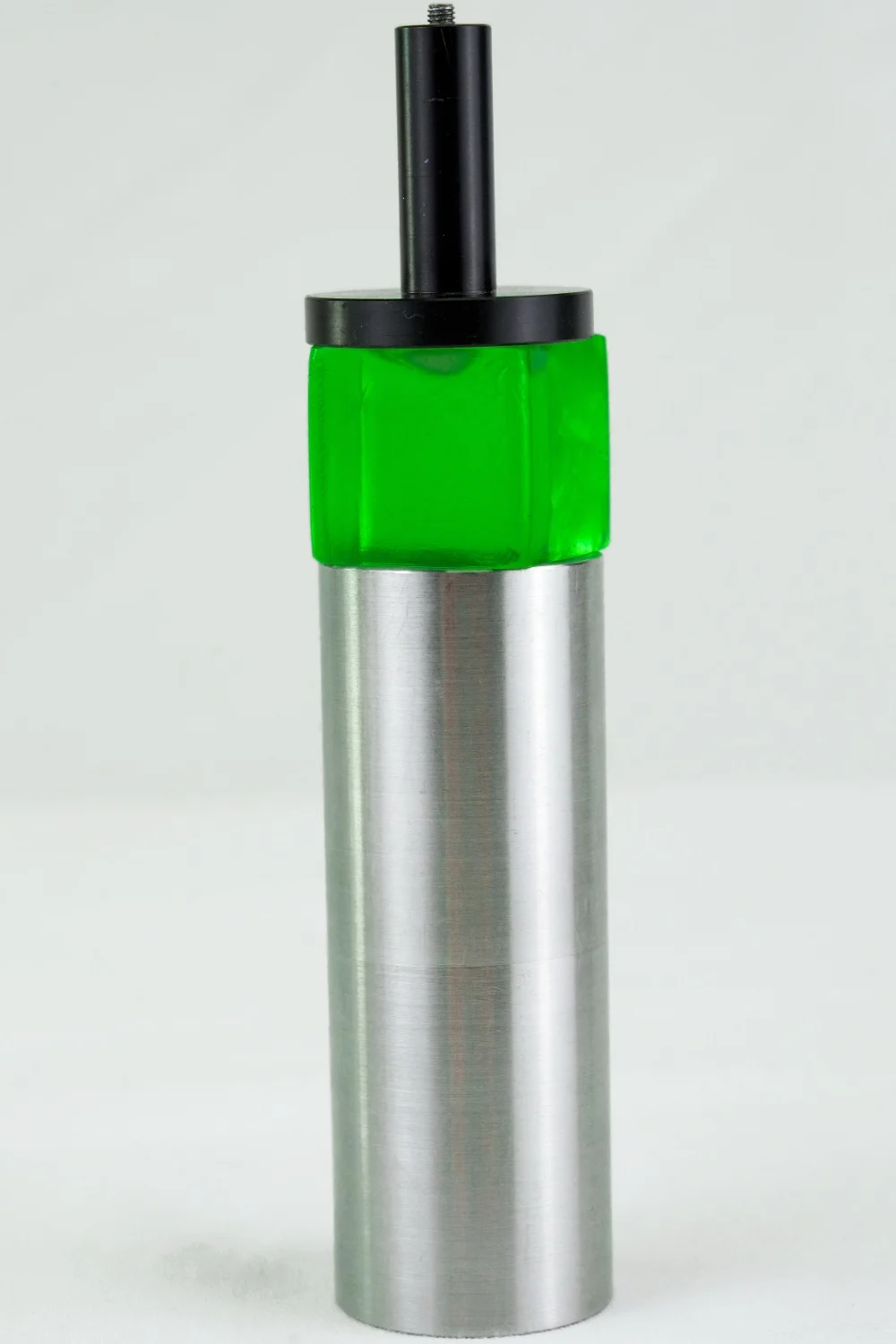
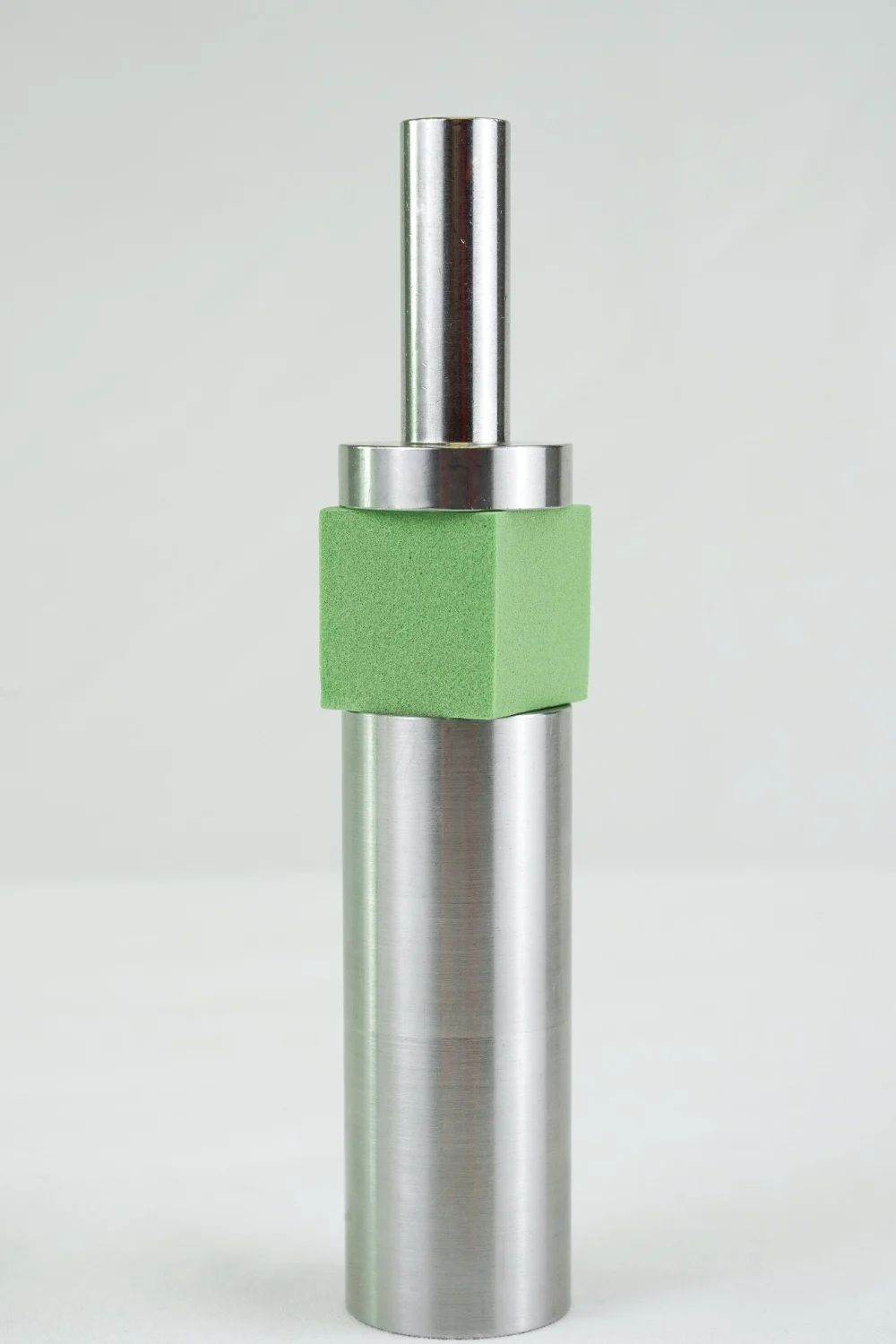
- Compression platens for delicate and higher-load workflows
- Additional fixtures available:
- Specialty fixtures for bending, indentation, peel, and puncture workflows
- Download the UniVert Catalog for a complete list of system configurations and available fixtures and accessories.
Featured Accessories and Upgrades
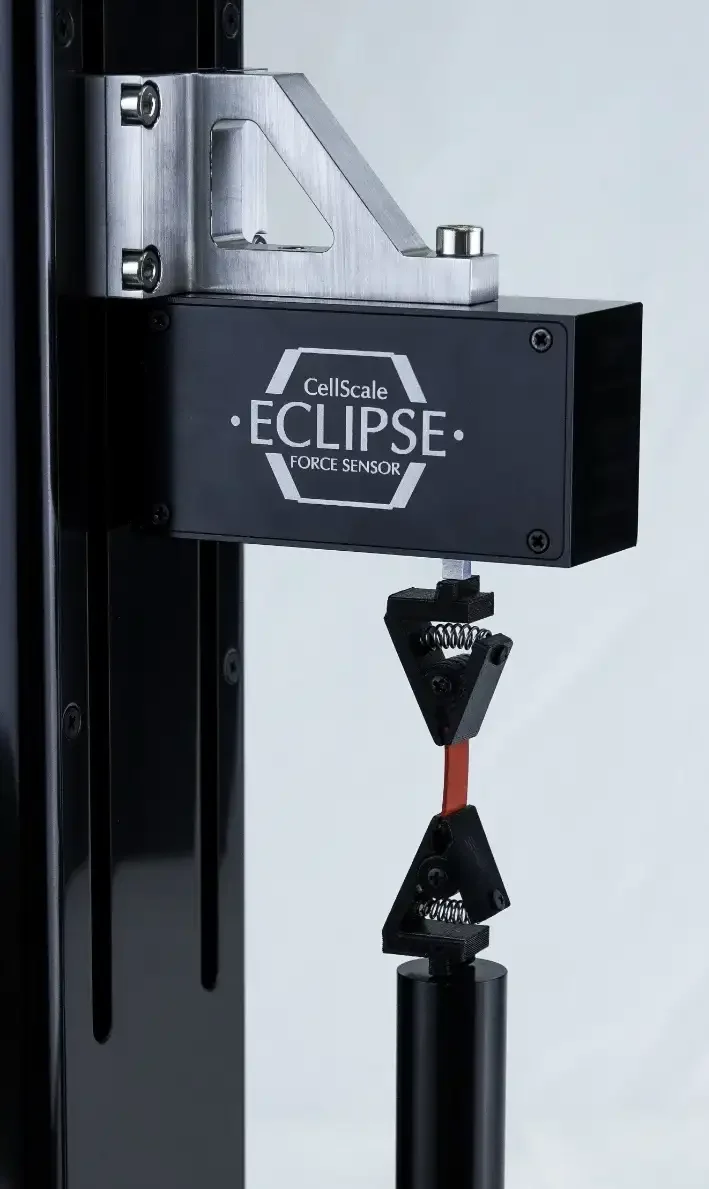
Eclipse Ultra-Low Force Sensor (Accessory)
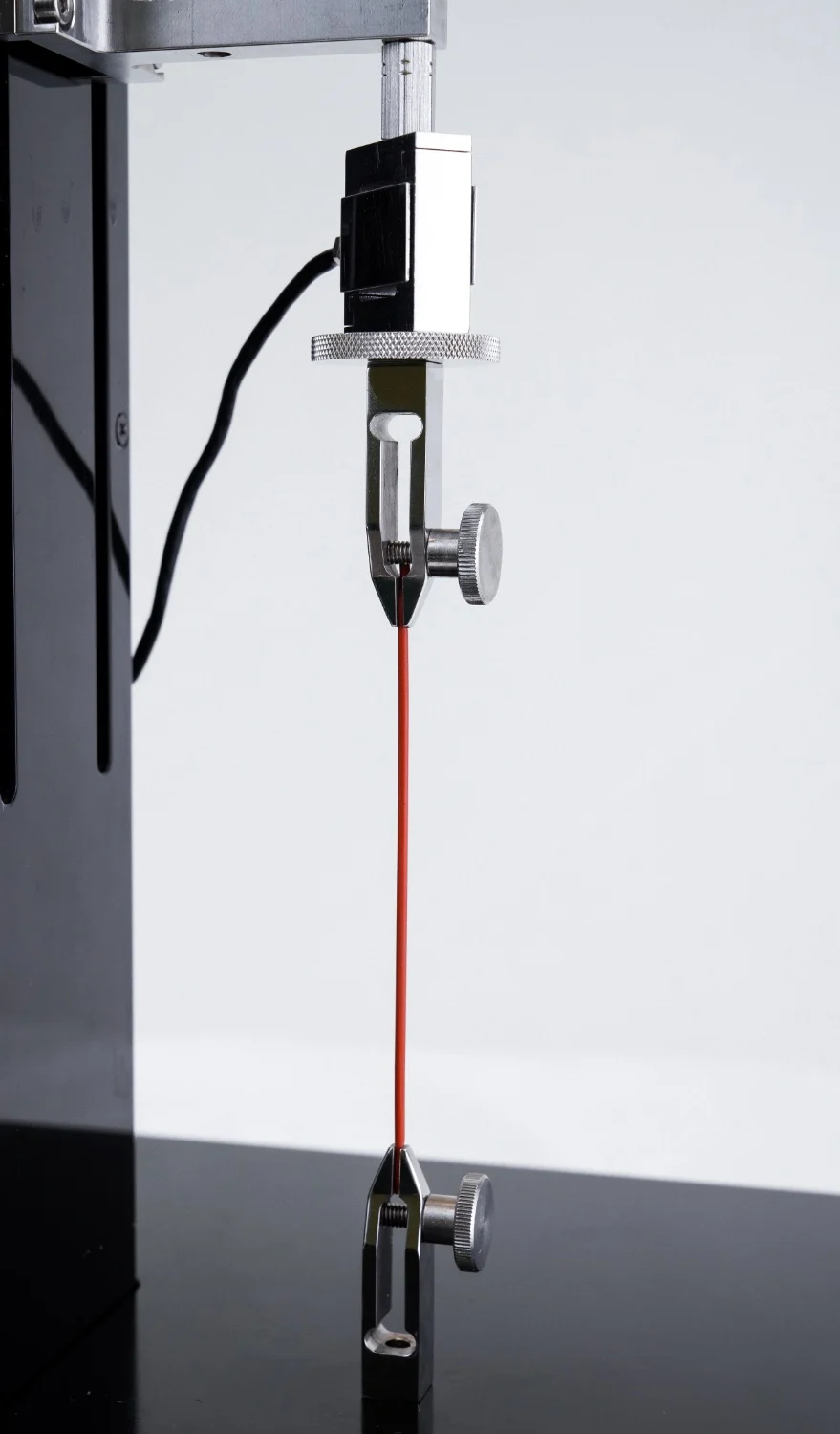
The Eclipse ultra-low force sensor is used for ultra-low force tensile, compression, and indentation testing on the UniVert platform.
- Key features:
- Ultra-low force tension, compression, and indentation workflows (down to 0.02N)
- Force resolution down to 40 µN with full-scale options in the milli-Newton range
- Overload protection rated to 10,000% of full scale
UniVert XY Stage (Upgrade)
The UniVert XY Stage upgrade adds automated X-Y positioning to the UniVert platform for multi-location testing and spatially distributed measurements.
- Key features:
- Expands the single-axis system to X, Y, and Z positioning
- Supports spatial mapping and multi-site testing on heterogeneous specimens
- Repeatable positioning for routine test sequences
Key System Upgrades Available
S2 Performance Upgrade:
Scientific Imaging System:
Media Bath Upgrade:
Multi-Axis Capable Upgrade:
Sync Pulse Upgrade:
Stroke Length Upgrade:
Custom Fixtures and Experimental Setups
When specimen geometry or protocols are non-standard, CellScale can design custom fixtures, control approaches, or environmental accommodations to support defensible research outcomes.
Strain-Controlled Mechanical Testing and Imaging Workflows
For many biomaterials and tissues, actuator displacement is not a reliable proxy for true specimen deformation. The UniVert can be configured with upgraded imaging (improvement over the standard imaging system) to support strain-controlled mechanical testing by tracking features on the specimen and controlling deformation within a defined region.
Real-time strain control from image tracking
Integrated imaging for visualization and reporting
Digital Image Correlation (DIC) for advanced strain measurement
Hydrated Mechanical Testing and Environmental Control
UniVert supports hydrated mechanical testing through optional temperature-controlled liquid bath configurations. These setups are compatible with tensile, compression, and time-dependent testing protocols.
Temperature-controlled liquid baths (horizontal or vertical)
Designed for multi-phase biological protocols
Software: Data Workflow and Data Analysis
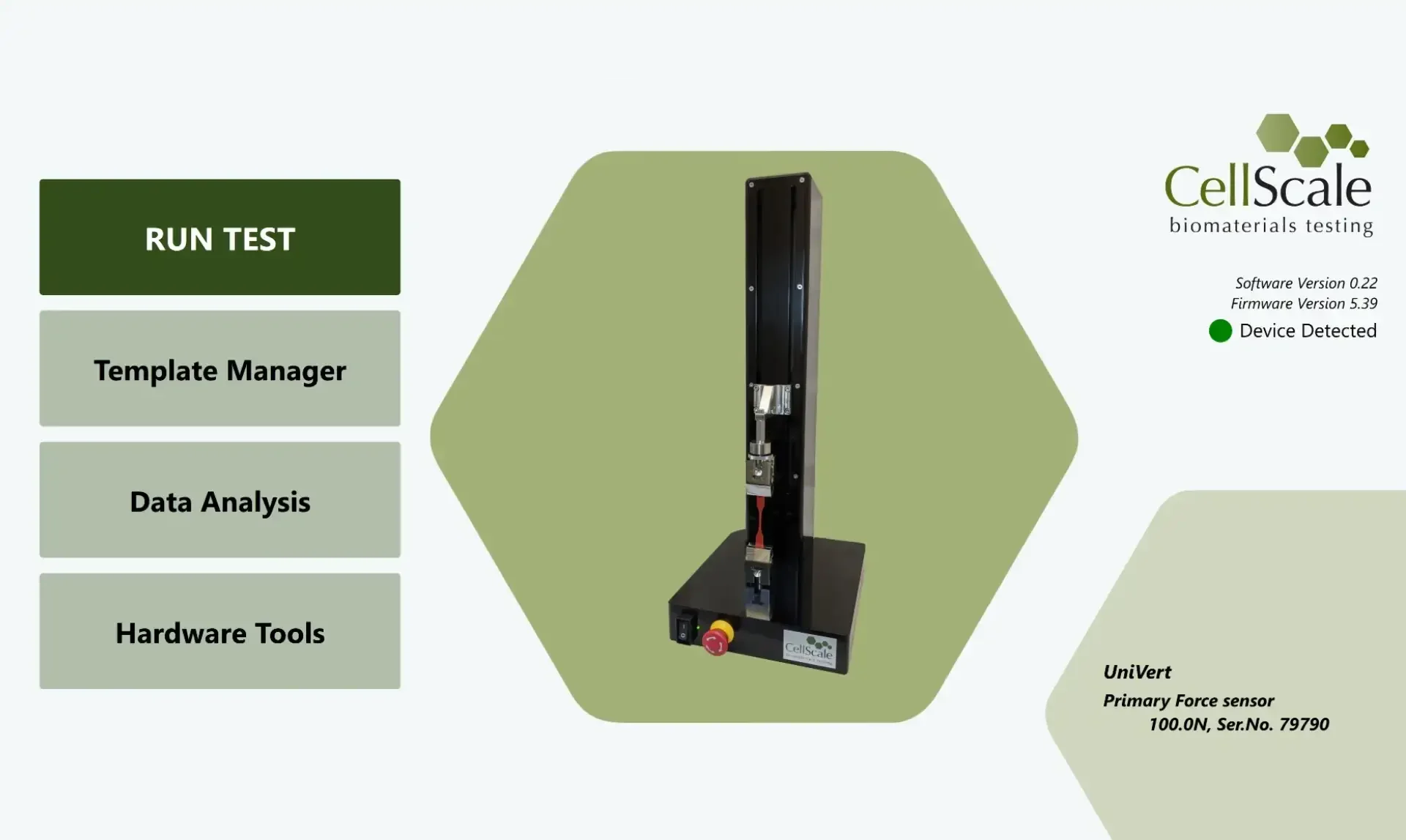
As a cyclic mechanical testing system, CellScale’s built-in LabJoy software (included with lifetime licence) is designed around repeatable test templates, live feedback during acquisition, and outputs that are straightforward for post-processing data analysis.
Test control for multi-phase protocols
Configure displacement and force control, multi-step sequences, and cyclic workflows right in the included LabJoy software. UniVert is commonly used as a cyclic mechanical testing system for preconditioning and fatigue-oriented studies where repeatability across cycles is essential.
Data analysis and export
Export datasets into our Data Analysis software (also included with lifetime licence) for stress-strain analysis, viscoelastic metrics, and comparative studies across conditions. Imaging outputs can be used for documentation and, when configured, non-contact strain analysis.
Research Applications Supported
- Tissue Engineering & Soft Tissue Biomechanics
- Cardiac Tissue Engineering & Mechanics
- Vascular Tissue Engineering & Mechanics
- Tendon and Ligament Tissue Engineering & Mechanics
- Cartilage and Meniscus Mechanics
- Skin and Wound Healing Biomechanics
- Musculoskeletal Tissue Engineering & Mechanics
- Biomaterials and Advanced Materials
- Hydrogel Mechanical Testing
- Cell Laden Hydrogels
- Polymers and Elastomers Testing
- Adhesives and Sealants Testing
- Membranes and Thin Films Mechanics
- Material Fatigue and Durability
- Mechanobiology and Bioelectronics
- Mechanotransduction
- Cancer Mechanobiology
- Organ-On-A-Chip Systems
- Wearable Bioelectronics
- Fibrosis & Tissue Remodeling
- Stem Cell Mechanobiology
UniVert in Peer-Reviewed Research
UniVert has been referenced in hundreds of peer-reviewed studies across tissue engineering, mechanobiology, biomechanics, and biomaterials research. If you are matching a method, specimen, or environment requirement, published UniVert examples are especially useful when you need a defensible protocol for hydrated soft tissues, hydrogels, or time-dependent mechanics.
February 20, 2026
Improving Reproducibility in Multi Axis Mechanical Testing
February 20, 2026
Best Practices for Measuring Viscoelastic Properties in Engineered Tissues
February 20, 2026
Understanding Cyclic Loading in Biomaterials Research
February 11, 2026
Advancing Soft Tissue Testing with Precision Mechanical Systems
Testimonials By Real Researchers
“I purchased the CellScale [BioTester] in my first year as an Assistant Professor. It allowed my first graduate student to start collecting data from day one rather than spend the time to design, build, and validate a custom device first.”
Dr. Manuel Rausch
Assistant Professor in The University of Texas at Austin’s Department of Aerospace Engineering & Engineering Mechanics and Department of Biomedical Engineering.
“I’m very happy to see a machine like this come along that really took the mechanical testing apparatus from every lab having their own home-built system to something that can really take a lot of the nuts and bolts assembly and machining and software and controller out of it and make that all a turnkey type capability.”
Dr. Peter Hammer
Scientist at Boston Children’s Hospital Congenital Heart Valve Program and Instructor of Surgery at Harvard Medical School.
“It’s a great system that offers all the capabilities and specs I needed for performing the type of research in my lab. This is the system with the best value on the market.”
Dr. Chung-Hao Lee
Associate Professor at the University of California, Riverside Bioengineering Department and elected fellow of the American Heart Association.
UniVert Videos
Short videos demonstrate setup, fixture changes, and real-world applications for the UniVert uniaxial mechanical testing system.
4:35
1:22
0:21
3:46
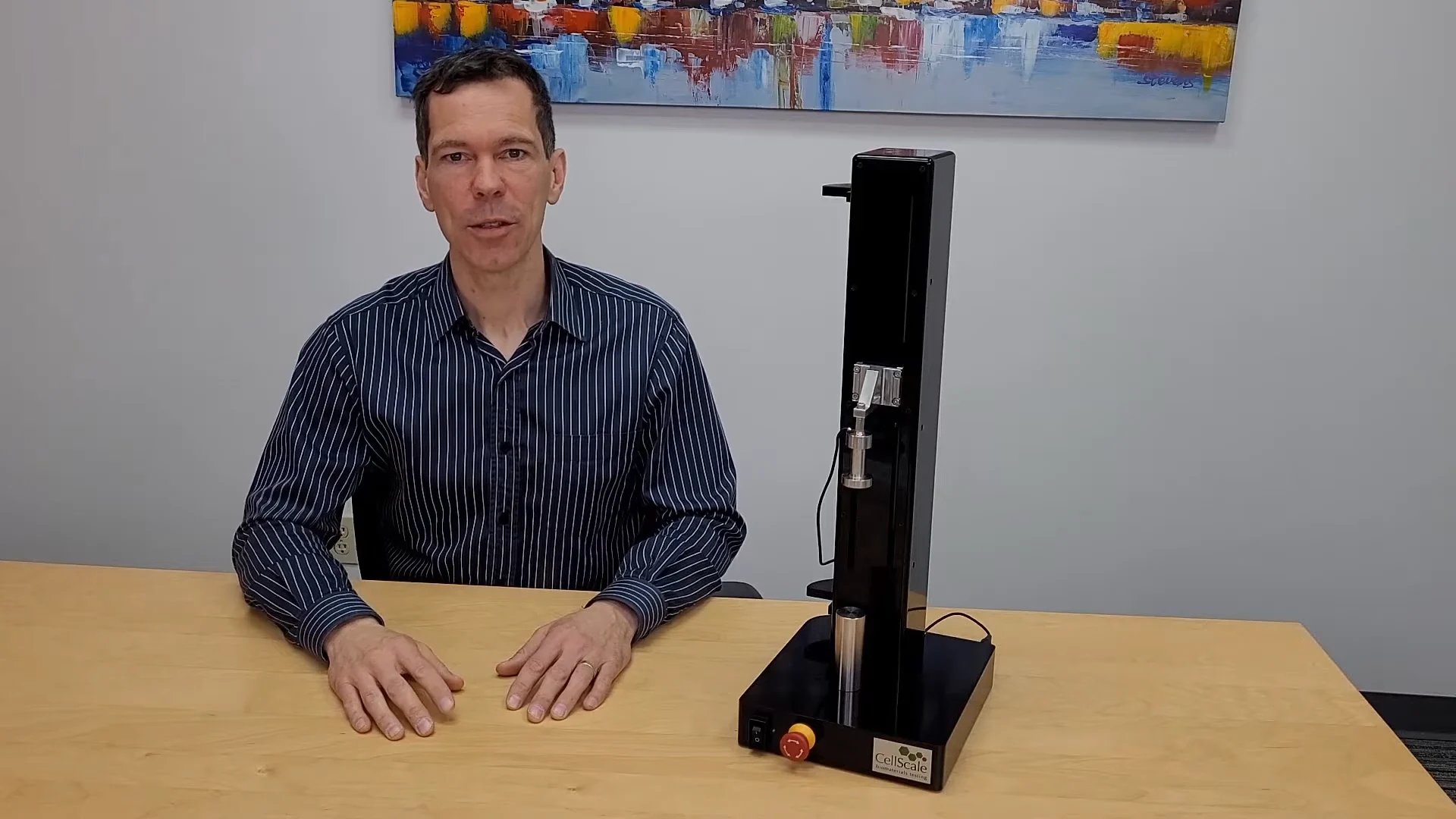
UniVert Mechanical Testing System Introduction and Demonstration
Introduction and demonstration of the UniVert mechanical testing system, highlighting versatile test modes, configurations, and software control.
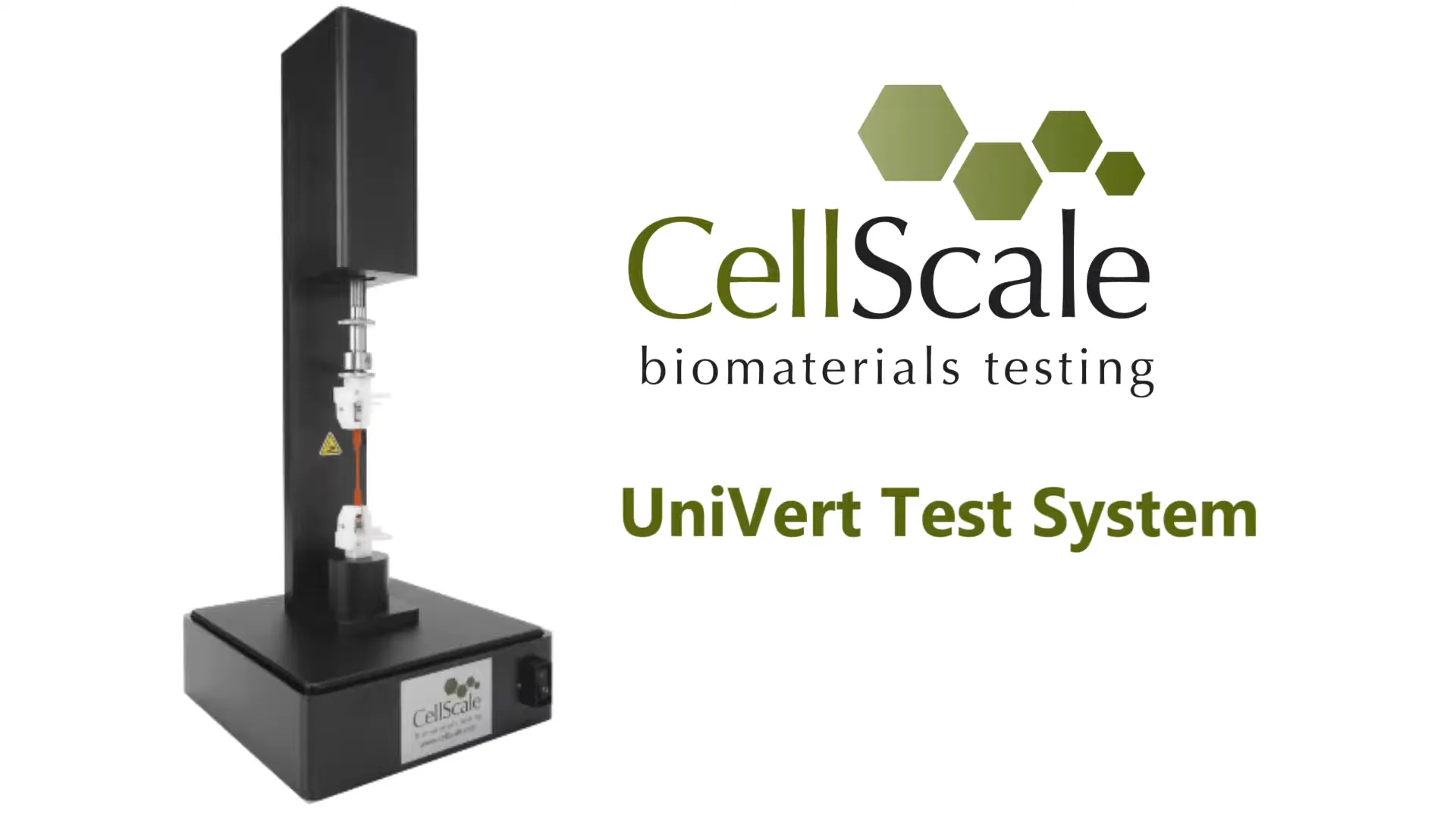
UniVert Mechanical Testing System Visual Overview
Visual overview of the UniVert mechanical testing system and its configurable testing capabilities.
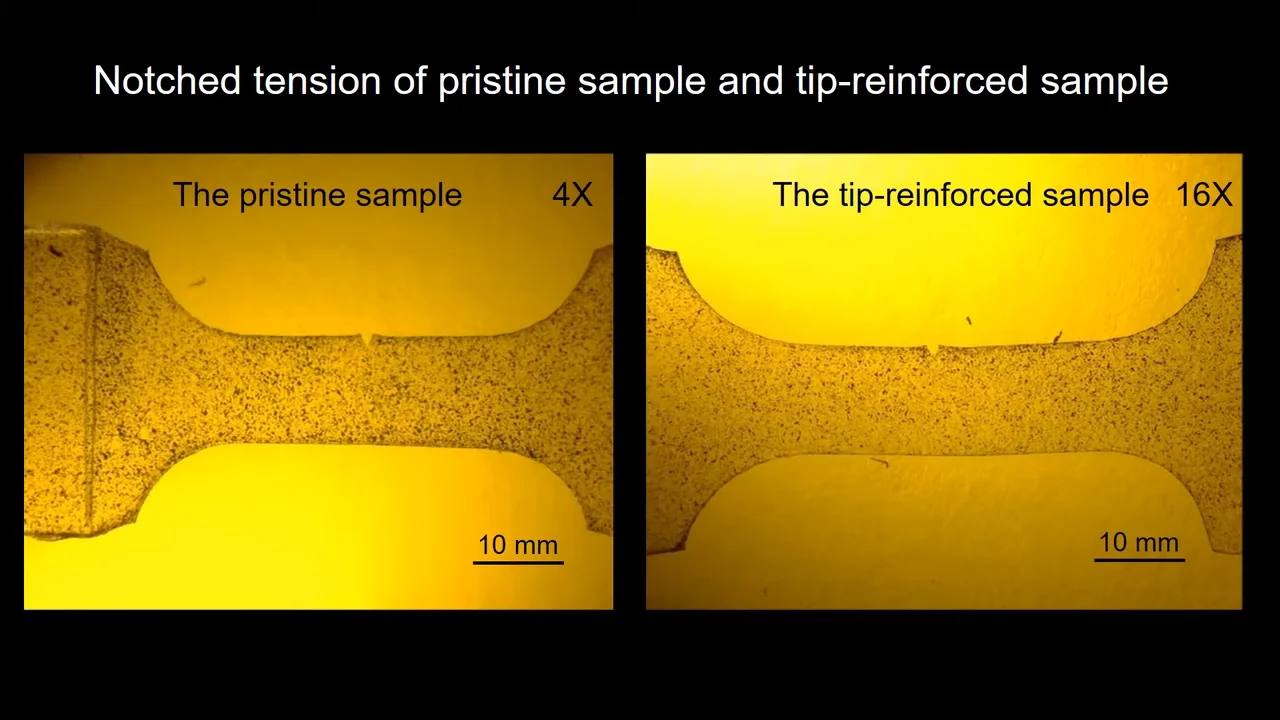
Tensile Fracture Testing of Engineered Hydrogels (MIT Zhao Lab)
Tensile fracture testing of engineered hydrogels comparing reinforced and notched samples.
Downloads
Download resources for the UniVert uniaxial mechanical testing system.
UniVert Catalog (PDF)
UniVert Brochure (PDF)
Eclipse Ultra-Low Force Sensor Brochure (PDF)
UniVert XY Table Brochure (PDF)
Related CellScale Mechanical Testers
MicroTester
BioTester
FAQ: UniVert Uniaxial Mechanical Testing System
What is the UniVert testing system best suited for?
The UniVert is a uniaxial tester for biomaterials work where the “small stuff” matters: how you hold the sample, how clean the alignment is, and whether you can trust the low-force signal.
What tests can I run on the UniVert?
The UniVert supports:
– Tension and compression
– Bending / flexural testing (fixture dependent)
– Shear testing (fixture dependent)
– Torsion testing (fixture dependent)
– Pressure testing (fixture dependent)
– Creep and stress relaxation
– Cyclic loading for preconditioning and repeatability checks
What is the force range of the UniVert?
From 0.02N with the Eclipse sensor accessory, up to 1000N with the UniVert 1kN frame. Choose based on your expected peak load and the low-force resolution you need.
How do I choose between UniVert S and UniVert 1kN?
Pick the UniVert S if you are mostly in soft-tissue and hydrogel territory and you want the best sensitivity at low loads. Pick the UniVert 1kN if your samples or fixtures drive the loads higher, or if you are testing stiffer materials and device-style assemblies. The workflow stays familiar, but the 1kN frame gives you more headroom.
Can the UniVert perform hydrated mechanical testing?
Yes. The UniVert can run tests in bath-style setups so samples can stay in PBS, saline, or culture media. That is often the difference between a clean dataset and a curve that is drifting because the specimen is drying out.
Can the UniVert perform long-duration creep tests?
Yes. The UniVert can run long creep holds with continuous data logging. For repeat studies, keep hydration and temperature consistent between runs.
When should I use imaging-based strain measurement instead of crosshead displacement?
Use imaging when crosshead motion does not reflect what the gauge region is doing. That shows up with slip, grip compliance, or deformation that concentrates outside the gauge area. Use it with soft tissues where the strain you care about is in the center of the specimen, not at the grips.
When is UniVert not the best fit?
If you need planar biaxial protocols for soft tissue biomechanics, the BioTester is usually the better tool. If your specimens are micro-scale and your forces are down in the micro-Newton to milli-Newton range, the MicroTester is typically a better match than a benchtop uniaxial frame.
Talk to an Applications Specialist
If you share your specimen type, expected load range, and target outputs, we will recommend a UniVert configuration that matches your research goals and supports repeatable testing from day one.