Mechanical Testing Systems for Breakthrough Biomaterials
Research
CellScale develops precision mechanical testing systems and bioreactors to characterize the mechanics of biomaterials, soft materials, engineered tissues, and more.
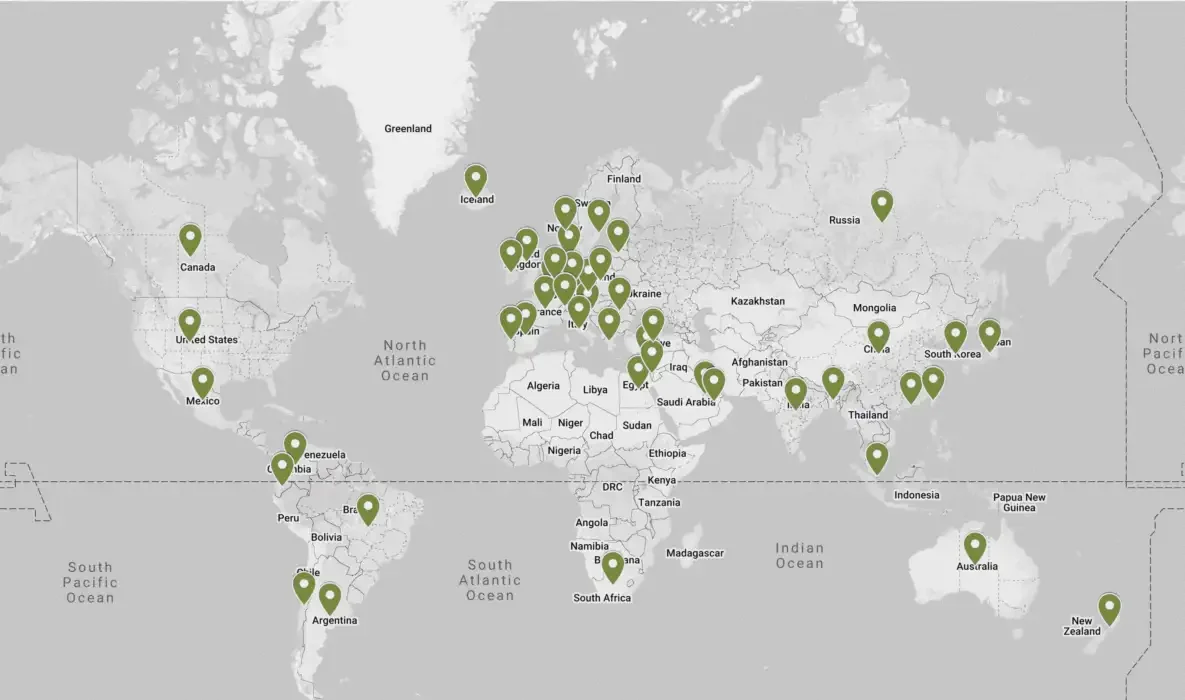
Helping Laboratories, Universities,
and Research Centers Worldwide
Free lifetime technical support with our instruments. For more than twenty years, researchers have relied on CellScale laboratory equipment, using our mechanical testing systems that are built specifically for biomaterials and soft matter.
What Our Systems Do
Our platforms deliver stable load control, precise displacement measurement, and repeatable mechanical properties analysis. Teams working with hydrogels, engineered tissues, cellular constructs, scaffolds, biomedical devices, and more, use our technology to uncover structure-function relationships and validate material performance in a controlled setting.
Benchtop mechanical testers and bioreactors for your biomaterials testing research, designed for accuracy, versatility, and ease of integration.
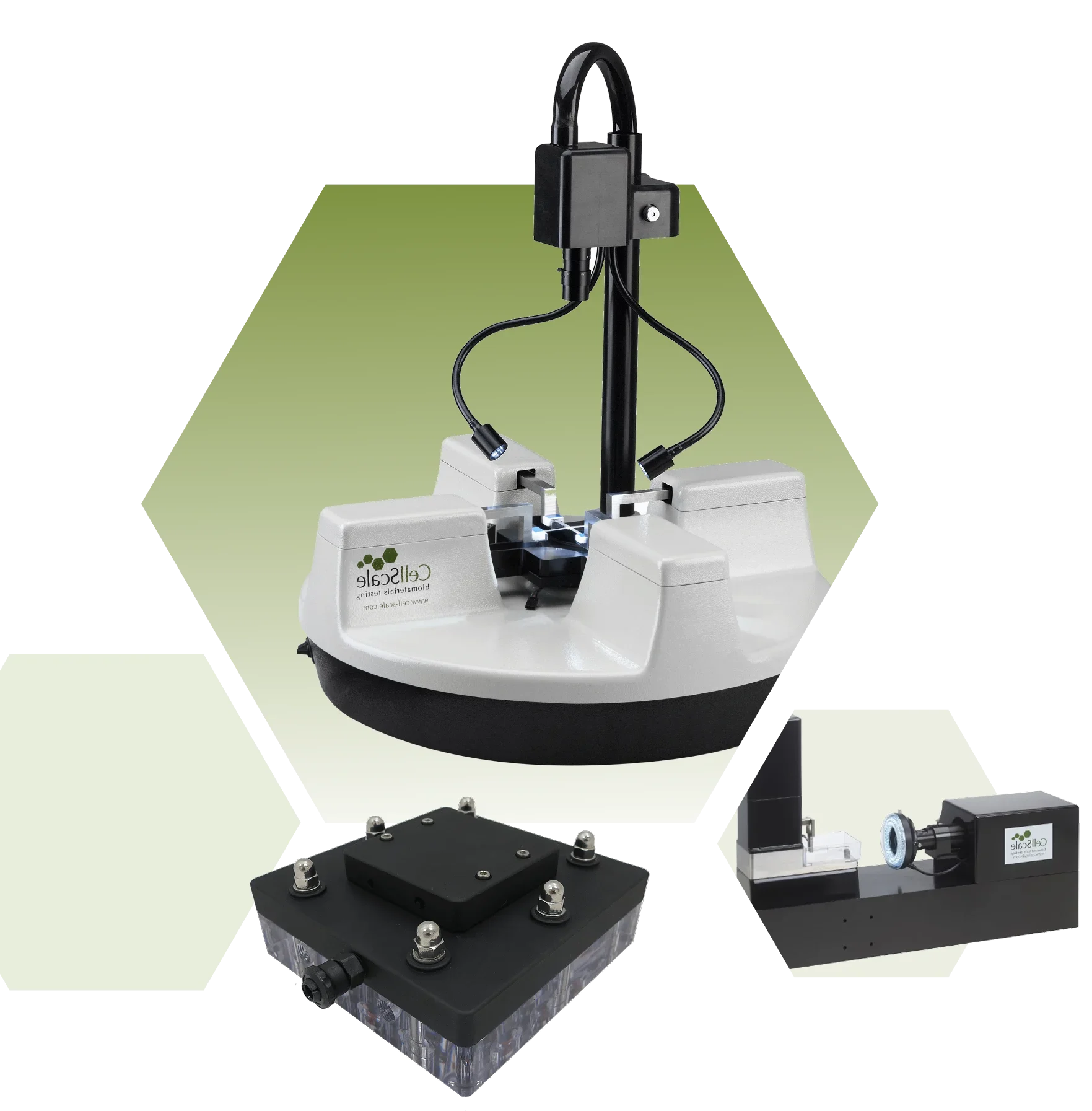
BioTester
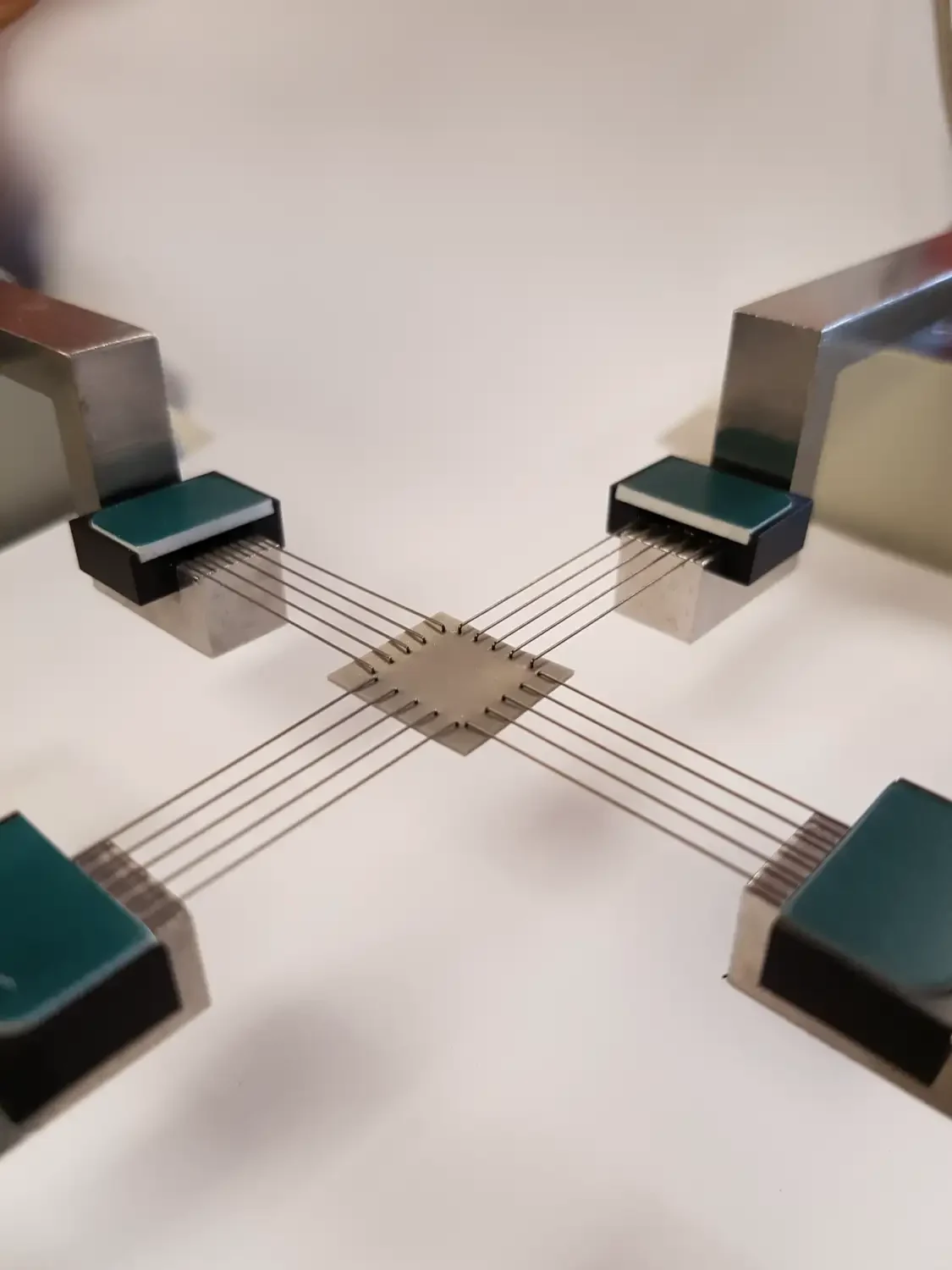
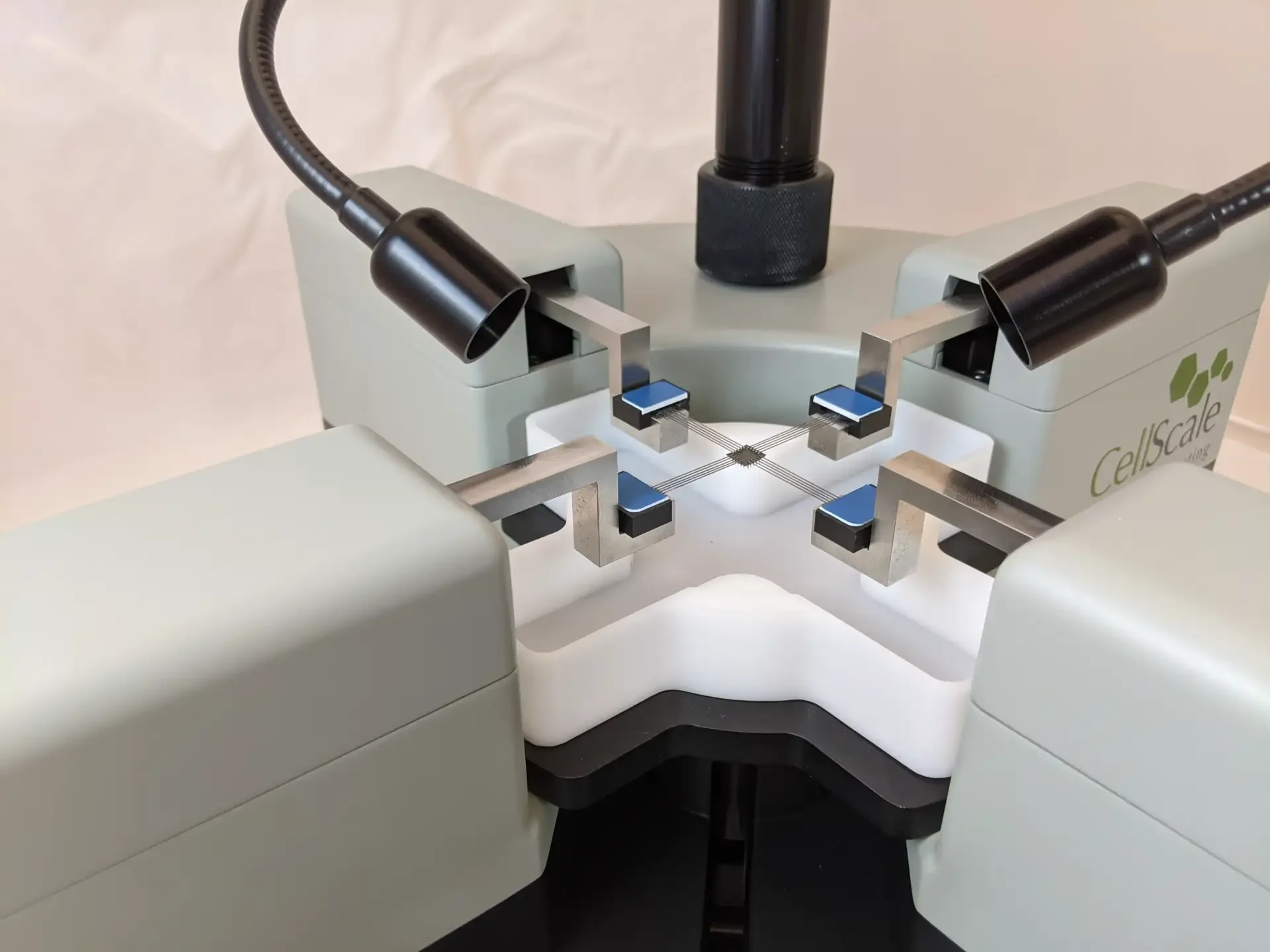
A biaxial mechanical testing system for controlled planar loading of tissues, membranes, and engineered constructs. BioTester is well suited to anisotropic materials and studies that require multi-directional testing and optical tracking.
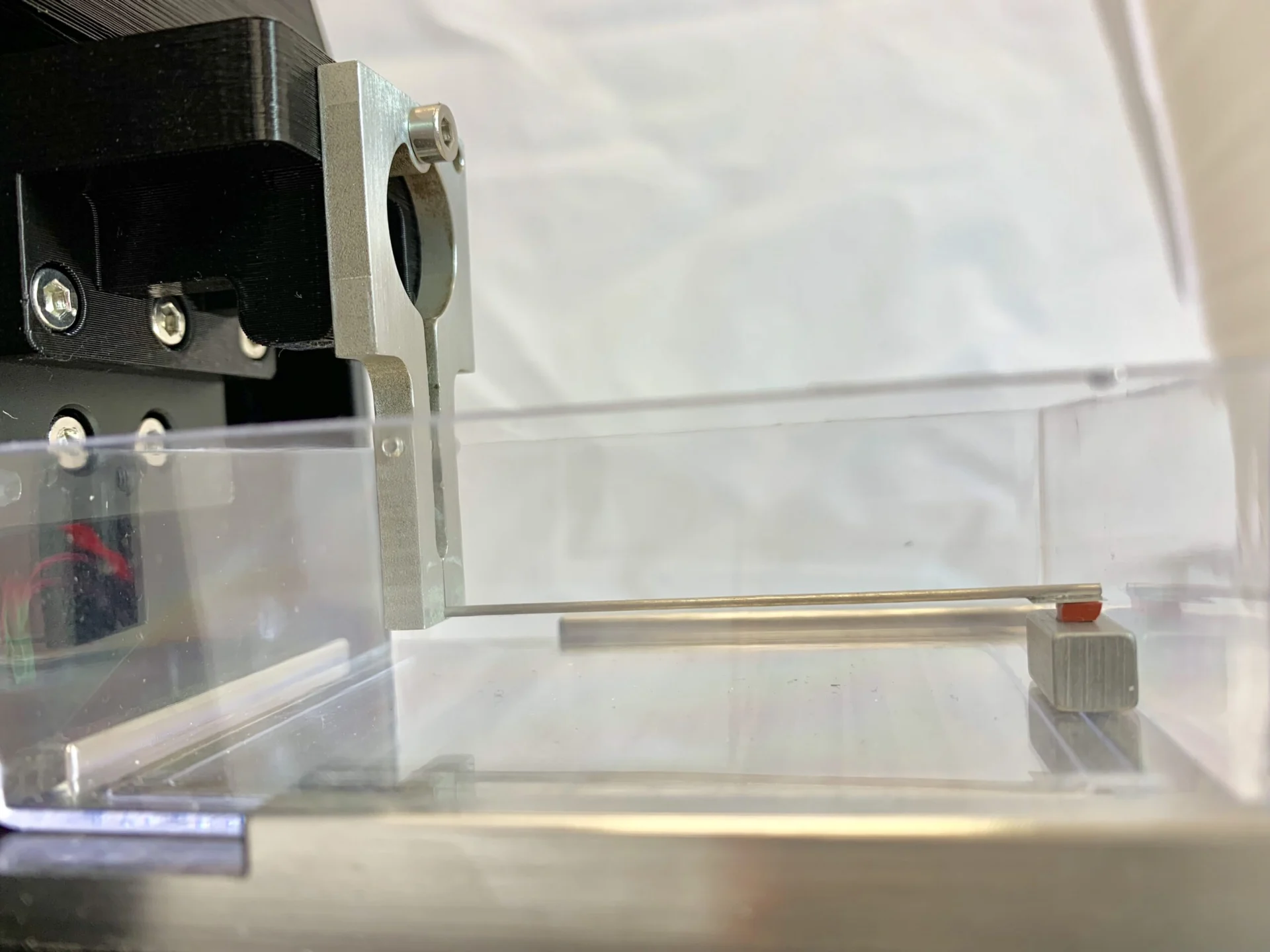
A micro-scale mechanical testing system for tissues, fibers, thin films, micro constructs, and other smaller specimens. MicroTester offers precise force and displacement control for the smallest samples.
A programmable bioreactor that provides controlled mechanical compression for cells and tissues across six independent wells. It enables studies in mechanobiology, tissue formation, and cellular response to mechanical cues
Our materials testing systems and bioreactors are used in a wide range of research applications across biomaterials testing and soft materials research. Researchers use our systems to investigate fundamental mechanics, validate engineered constructs, and determine mechanical properties analysis of biological and synthetic material performance.
CellScale benchtop mechanical testers and bioreactors are capable of many standardized and custom mechanical testing methods. These methods help researchers quantify stiffness, strength, durability, and time-dependent mechanical behaviour across both biological and synthetic materials.
Tensile Testing
Measures stiffness, strength, and extensibility of soft materials and tissues.
Compression Testing
Characterizes bulk mechanical behaviour of hydrogels, tissues, and scaffolds.
Biaxial Testing
Evaluates anisotropic and multi-directional mechanics in soft tissues and membranes.
Fatigue Testing
Assesses durability and long-term performance under repeated or cyclic loading.
Viscoelastic & Time-Dependent Testing
Quantifies creep, stress relaxation, and time-dependent mechanical response.
Micro-Mechanical Testing
Enables force-controlled testing of micro-scale samples, fibers, and microtissues.
CellScale technology appears in peer-reviewed publications across the biomedical, tissue engineering, soft materials, and mechanobiology research communities. These studies use our mechanical testing systems to quantify material stiffness, analyze deformation, evaluate engineered tissues, and explore cellular responses to mechanical load.
Journal logos shown represent publications in which CellScale instruments were used.
Logos are the property of their respective publishers.
Latest News
Our team publishes research highlights, applications, case studies, and educational resources covering journal articles, testing methods, and best practices for mechanical testing equipment.
Improving Reproducibility in Multi Axis Mechanical Testing
February 20, 2026
Best Practices for Measuring Viscoelastic Properties in Engineered Tissues
February 20, 2026
Understanding Cyclic Loading in Biomaterials Research
February 11, 2026
Advancing Soft Tissue Testing with Precision Mechanical Systems
Comments From the Field
“I purchased the CellScale [BioTester] in my first year as an Assistant Professor. It allowed my first graduate student to start collecting data from day one rather than spend the time to design, build, and validate a custom device first.”
Dr. Manuel Rausch
Assistant Professor in The University of Texas at Austin’s Department of Aerospace Engineering & Engineering Mechanics and Department of Biomedical Engineering.
“I’m very happy to see a machine like this come along that really took the mechanical testing apparatus from every lab having their own home-built system to something that can really take a lot of the nuts and bolts assembly and machining and software and controller out of it and make that all a turnkey type capability.”
Dr. Peter Hammer
Scientist at Boston Children’s Hospital Congenital Heart Valve Program and Instructor of Surgery at Harvard Medical School.
“It’s a great system that offers all the capabilities and specs I needed for performing the type of research in my lab. This is the system with the best value on the market.”
Dr. Chung-Hao Lee
Associate Professor at the University of California, Riverside Bioengineering Department and elected fellow of the American Heart Association.
Advance Your Biomaterials and Mechanical Testing Research
Our team will help you identify the right benchtop mechanical tester for your setup, be it a biaxial tester, micro-scale tester, bioreactor, or education focused system. Connect with us to discuss your project and explore which mechanical testing system best supports your work.